A defined waist may look strong, but it does not tell you how well your core actually works. Underneath the abdominal muscles sits a group of muscles that rarely makes it into a workout photo. The pelvic floor.
These muscles quietly hold things in place. They help you control your bladder and bowel, breathe, have sex comfortably, and stay steady when you pick something up. For women recovering from pregnancy or childbirth, the pelvic floor shapes everything from laughing without leaking to lifting a baby without that dropping feeling in the pelvis.
That is why pelvic floor exercises for women deserve more attention than another round of crunches. The goal is not to make these muscles tighter. It is to teach them to work in sync with the rest of you. Most training chases a tighter muscle. We build for control instead, the kind that lets these muscles contract, relax, and coordinate with the rest of her body.
Why Your Pelvic Floor Is Part of Your Core
I used to think of the pelvic floor as one isolated thing. Erika Lydon, a pelvic floor physical therapist, has helped me see that it is part of a larger system. The pressure inside your abdomen depends on your diaphragm, deep abdominals, back and hips all working together. When you breathe, cough, lift, run or stand up, the team has to coordinate.
What I wish someone had told me earlier is this. These muscles need to relax fully to work well, not just contract harder. A pelvic floor that cannot release will cause as many problems as one that cannot contract. Visible abs are mostly an aesthetic outcome.
How Pregnancy and Childbirth Change Things
Pregnancy puts months of growing pressure on the pelvic floor and the abdominal wall. Hormones soften the tissues that hold the pelvis together. During a vaginal birth, the pelvic floor stretches to let the baby through. A cesarean avoids some of that stretching, but pregnancy itself can still change how the pelvic floor and the deep core behave.
Recovery varies. Some women bounce back without ongoing problems. Others deal with leaking, a heavy feeling in the pelvis, pain during sex, or trouble emptying the bladder. UPMC notes that postpartum therapy is built around the individual. [UPMC]
Kegel Exercises Can Help—but They Are Not the Whole Answer
Kegels are the conscious squeeze-and-release of the pelvic floor. They can help some women build strength and reduce certain types of leaking. They are also prescribed too casually. A healthy pelvic floor is not the tightest one. It needs strength to support the pelvic organs, endurance to last through a busy day, and enough give to release on demand. Cleveland Clinic warns that overdoing Kegels can leave the muscles clenched and grumpy. [Cleveland Clinic]
When the pelvic floor is too tight, more squeezing is the wrong move. You can end up with pelvic pain, pain during sex, an urgent need to pee, or trouble starting the flow. Breathing, mobility work, or hands-on treatment from a pelvic floor physical therapist is usually more useful than another set of reps.
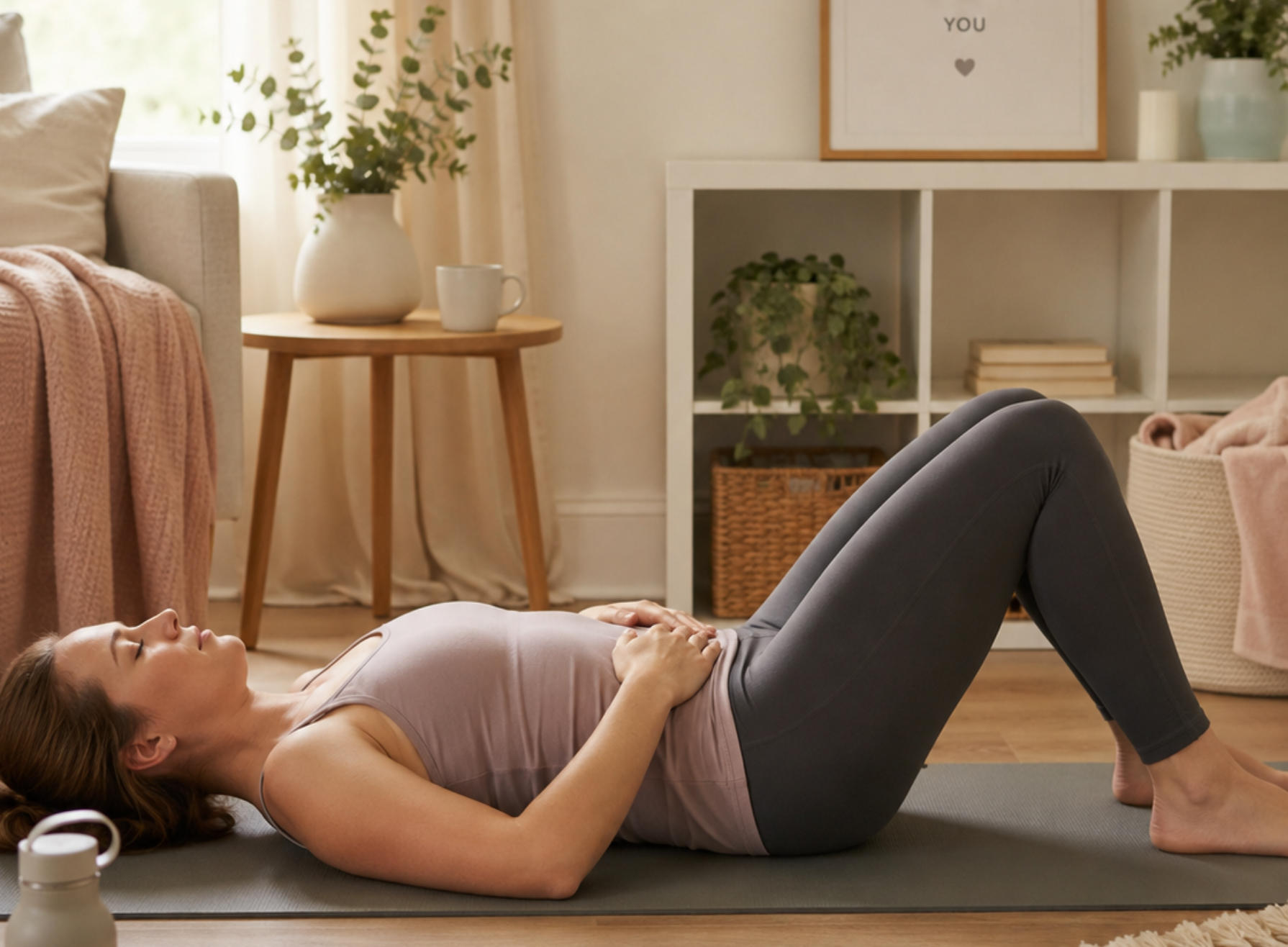
How to Perform a Gentle Kegel Correctly
If your healthcare professional has confirmed that strengthening is appropriate, start with technique rather than intensity.
Find the right muscles and breathe as you contract. Imagine gently stopping yourself from passing gas while drawing the muscles around the vagina and anus slightly upward. Stopping urine midstream once can help you locate it, but it should not become a habit. Inhale and let your rib cage, abdomen and pelvic floor soften. As you exhale, gently lift the pelvic floor. Keep your butt, thighs and upper abs out of it. Do not hold your breath. Release fully on the way down. A three-second lift followed by at least three seconds of full release is a good starting place. [Mayo Clinic]
Watch your symptoms. Stop if the work causes pain, more pressure, bleeding, worse leaking, or trouble letting go afterward. Dr. Sara Reardon, a pelvic floor physical therapist, often starts postpartum reconnection with diaphragmatic breathing, gentle activation and complete release before adding any real strengthening. [The Vagina Whisperer]
Your Core Needs Coordination, Not Constant Bracing
Many women are taught to hold the stomach in all day. I get why. It feels like discipline. But constant bracing pushes pressure downward and makes it harder for the pelvic floor to release.
A better goal is responsive strength.
Try exhaling gently as you stand from a chair, lift your baby or pick up a laundry basket. Let your deep abdomen and pelvic floor engage together, then release when the effort ends.
This kind of coordination prepares your body for the movements that actually happen.
Can Pelvic Floor Training Tools Help?
Once a professional has confirmed weakness and postpartum tissues have healed, an internal training tool can offer feedback or resistance. Before I name a product, I want to be honest about when this is and is not a good idea.
Kegel balls are not a shortcut and not an automatic postpartum fix. They are not the right tool if you have pelvic pain, an overactive pelvic floor, an active infection, unexplained bleeding, or trouble releasing the muscles. Postpartum users should wait until a doctor or pelvic floor physical therapist clears internal use. The goal is body awareness, not wearing the heaviest weight for the longest stretch.

The Joybloom 5-Piece Progressive Weighted Kegel Ball Set gives you five different weights, so you can start light and progress only when your body is ready. The keyword is gradually. We like that the set grows with you.
When you have been cleared, begin with the lightest weight that feels manageable in a private setting. Use a water-based lubricant, follow the cleaning instructions, and stop if you notice pain, heaviness, numbness or muscle fatigue. The point is awareness, not endurance.
One more thing I appreciate about this product line. The Joybloom builds its intimate wellness products around a simple idea. Learning what your own body feels like should not come with an app, an account, or a digital trail. There is no quiet data collection in the background while you are doing the work. For pelvic floor training, that feels like the right default. You deserve a tool that stays out of your personal business on every level.
When to See a Pelvic Floor Physical Therapist
It is worth asking for a pelvic floor assessment if you are dealing with persistent leaking, pelvic pain or pressure, a bulging sensation, or trouble emptying the bladder or bowel. A pelvic floor therapist will look at your breathing, posture, hip mobility, abdominal function and daily movement, not just your ability to do a Kegel. Two women with the same symptoms can need very different plans.
Frequently Asked Questions
Are Kegel exercises safe after childbirth?
They can be, for some women. Postpartum timing and technique should be individual. Ask your healthcare professional before starting, especially if you experienced tearing, surgery, pain or pressure.
Can Kegels make my stomach flatter?
Not directly. Kegels do not burn abdominal fat or carve visible abs. They can improve coordination inside the deep core, which may support posture and pressure management.
How do I know whether my pelvic floor is weak or too tight?
Symptoms can overlap. Leakage does not always mean weakness, and pain does not automatically mean tightness. A pelvic floor physical therapist can assess strength, endurance, coordination and the ability to relax.
Should I do pelvic floor exercises every day?
Frequency depends on your symptoms, technique and treatment goal. More is not always better. Quality contractions with complete relaxation are generally more useful than a high number of rushed repetitions.
Can I use weighted Kegel balls postpartum?
Only after your tissues have healed and a qualified healthcare professional has cleared internal use. Weighted balls are intended for progressive training and may not be appropriate for a painful or overactive pelvic floor.
The Takeaway
Your pelvic floor may never appear in a mirror, but its function can affect bladder control, bowel health, intimacy, breathing and the way your core handles daily life.
That makes it worthy of more than an occasional set of Kegels. The best pelvic floor exercises for women focus on strength, relaxation and coordination. For postpartum recovery, the right program should respond to your body rather than force it into a generic routine.
Visible abs may be a fitness goal. A responsive, comfortable pelvic floor is an investment in how you live.