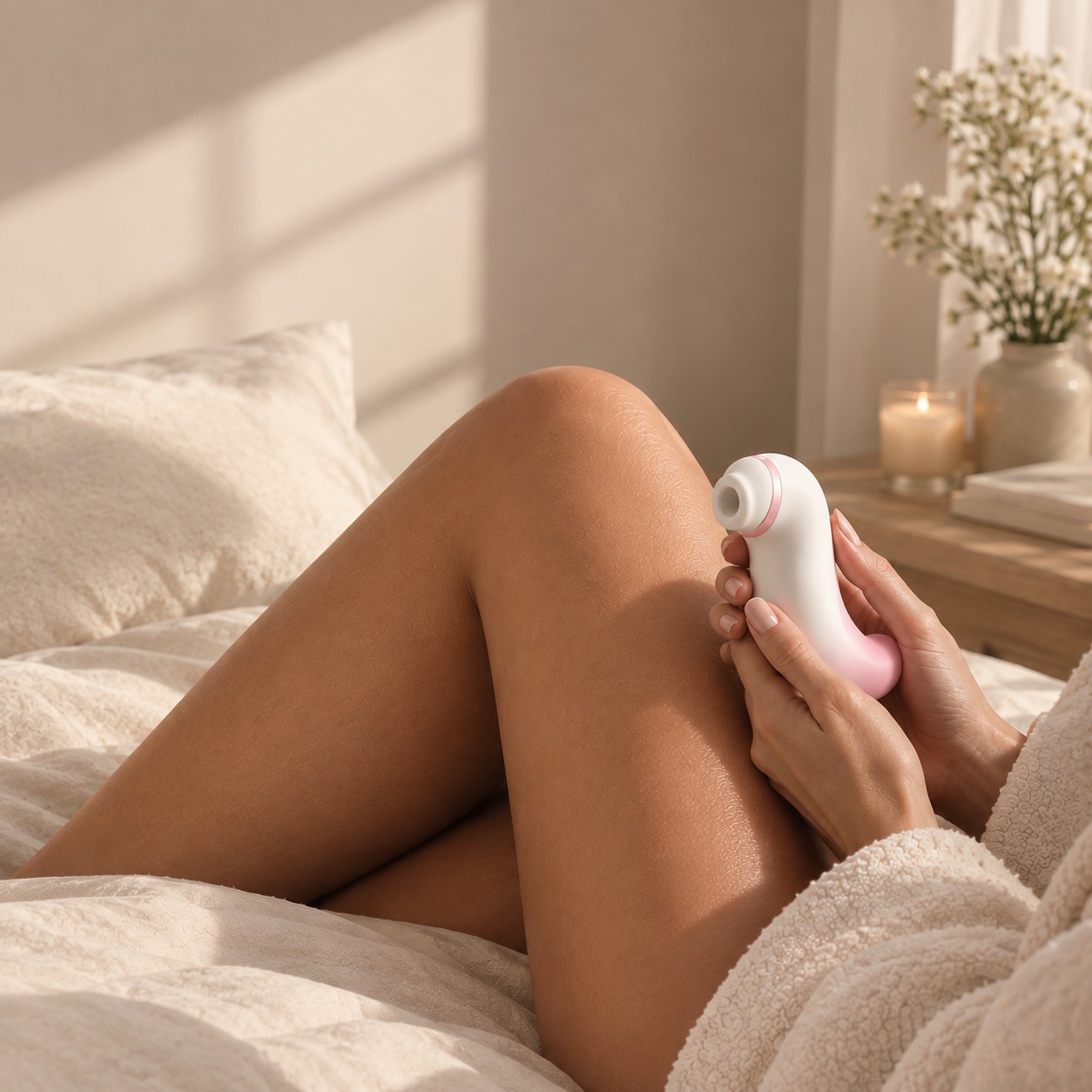
A few years ago, a friend told me she had been quietly bracing for menopause the way her mother had. Less interested. Less comfortable. A slow narrowing of what her body was allowed to want.
She was surprised, then, when the change mostly brought clarity. Less patience for sex that did not feel good. More interest in touch she had previously been too tired or self-conscious to ask for.
That is one of the things I want to leave space for in this article. Menopause does not have a single script. Some women feel less desire. Some feel more. Many experience no simple pattern at all.
The Menopause Society reminds readers that there is no standard level of sexual desire or activity to meet at any age. The Menopause Society
Understanding sex after menopause begins by replacing age-based expectations with a better question: What does this version of my body need to feel comfortable, present and interested?
Listen
Build a personal baseline without treating youth as an automatic sexual prime.
Reassess
Expect variation and learn what works for the body you have now.
Redefine
Let comfort, access and your own meaning of intimacy set the pace.
Earlier Adulthood: Learn Your Body’s Language
The twenties and thirties are often framed as a woman's automatic sexual prime. In reality, plenty of people spend those years dealing with body anxiety, limited anatomical education, work pressure, caregiving, or the habit of performing for a partner.
Where does touch feel pleasurable? Where does it feel neutral? What tends to make you tense? Whether you prefer broad pressure or a precise point, a changing rhythm or a steady one.
These observations matter later because they become a personal baseline. Your preferences may change. The listening part stays useful.
Joybloom's guides to clitoris anatomy, pressure-free masturbation techniques and body image and sexual confidence can help build that language without turning pleasure into a test.
Perimenopause: Expect Variation, Not Failure
Natural menopause usually arrives between ages 45 and 55, although the timing can vary. Perimenopause is the long transition that leads up to it, when cycles and hormone levels can stop being predictable.
The World Health Organization describes natural menopause as generally occurring between ages 45 and 55 worldwide and notes that the transition can affect physical, emotional, mental and social well-being. World Health Organization
During this stage, interest can rise, drop, or hold steady.
Hot flashes and broken sleep can drain the energy available for intimacy. Stress, medication, relationship changes, and caregiving can matter as much as hormones do. At the same time, plenty of women grow more confident about naming their preferences or are less willing to settle for sex that does not actually satisfy them.
Sometimes it is a loss of patience for uncomfortable, rushed, or one-sided experiences.
Perimenopause can be a useful point of reassessment. Instead of trying to recreate how pleasure felt a decade ago, it becomes an invitation to learn what works now. If stress is part of the picture, read the gentle guide to stress and low libido.
After Menopause: Put Comfort Before Performance
Falling estrogen affects the vulva, the vagina, and the urinary system. Vaginal tissue can become drier. It can also become thinner. It can also lose some of its elasticity. Natural lubrication can take longer to appear.
These changes are collectively known as genitourinary syndrome of menopause, or GSM. The common signs include vaginal dryness, burning, irritation, urinary shifts, and pain during sex. Unlike some other menopausal symptoms, GSM can slowly get worse without care, and there are real treatments available. The Menopause Society’s GSM guide
Physical change is often a reason to change your approach.
- More time for arousal
- Generous lubricant
- Gentler pressure
- External stimulation before penetration
- Massage or mutual touch
- Solo exploration
Massage, mutual touch, and solo exploration are complete forms of intimacy, not placeholders for the real thing.
Later Life: Define Pleasure on Your Own Terms
Aging can become a chance to redefine what intimacy means, instead of measuring it against a younger version of yourself. National Institute on Aging
For one person, a satisfying sex life includes partnered sex. For another, it includes masturbation, affectionate touch, slow massage, or emotional closeness. There is no medically required frequency, and no age at which exploration has to stop.
Bodies may need more time to become aroused. Hands and joints can tire more easily. Some positions stop working. These are practical design problems, not proof that the body is no longer sexual.
Change the position. Support the hips with a pillow. Choose tools that are easier to grip. Pause when sensation becomes overwhelming. Let comfort set the pace. The guide to sex positions to try with a vibrator offers adaptable ideas for partnered exploration.
A Pressure-Free Way to Rediscover Sensation
Start outside the genitals. Notice your breathing while your hands move across the neck, the chest, the belly, and the inner thighs. This gives the nervous system time to settle without asking the body to perform.
Move closer only when curiosity shows up. Explore around the vulva and the clitoral hood before applying direct pressure. If a sensation feels too sharp, try a wider area, a slower rhythm, or a thin layer of fabric between the skin and your hand or device.
A few simple questions tend to work better than a goal.
What feels pleasant today?
Do I want more time or less intensity?
Does my body want touch, penetration or neither?
Am I continuing because it feels good—or because I think I should?
Choosing Tools for a Changing Body
Before I name a product, the honest line. A pleasure product cannot diagnose sensitivity, predict what your body will enjoy, or replace medical care. But a pleasure product can help you explore sensation without requiring a partner or a particular position.

The Joybloom Sola Wand
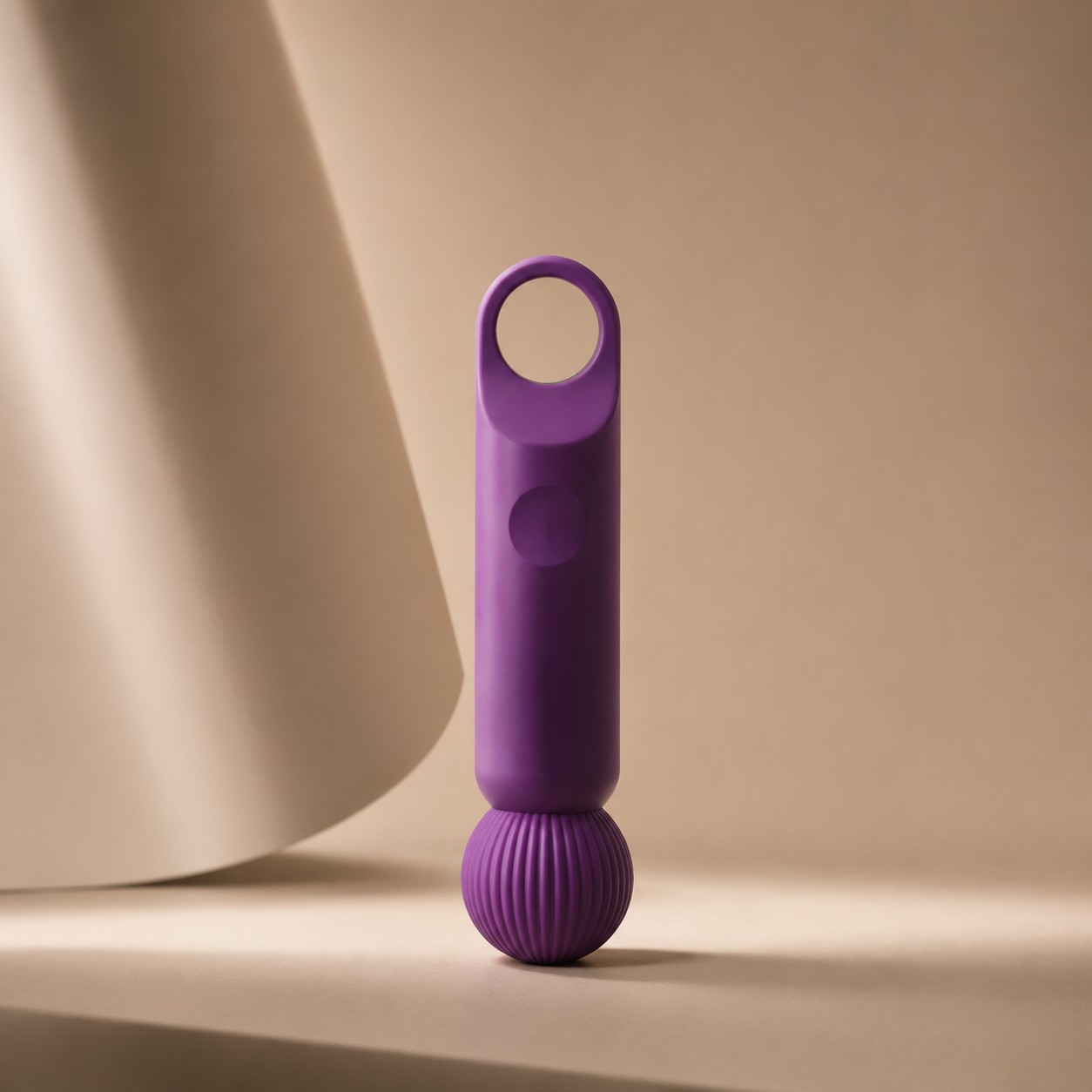
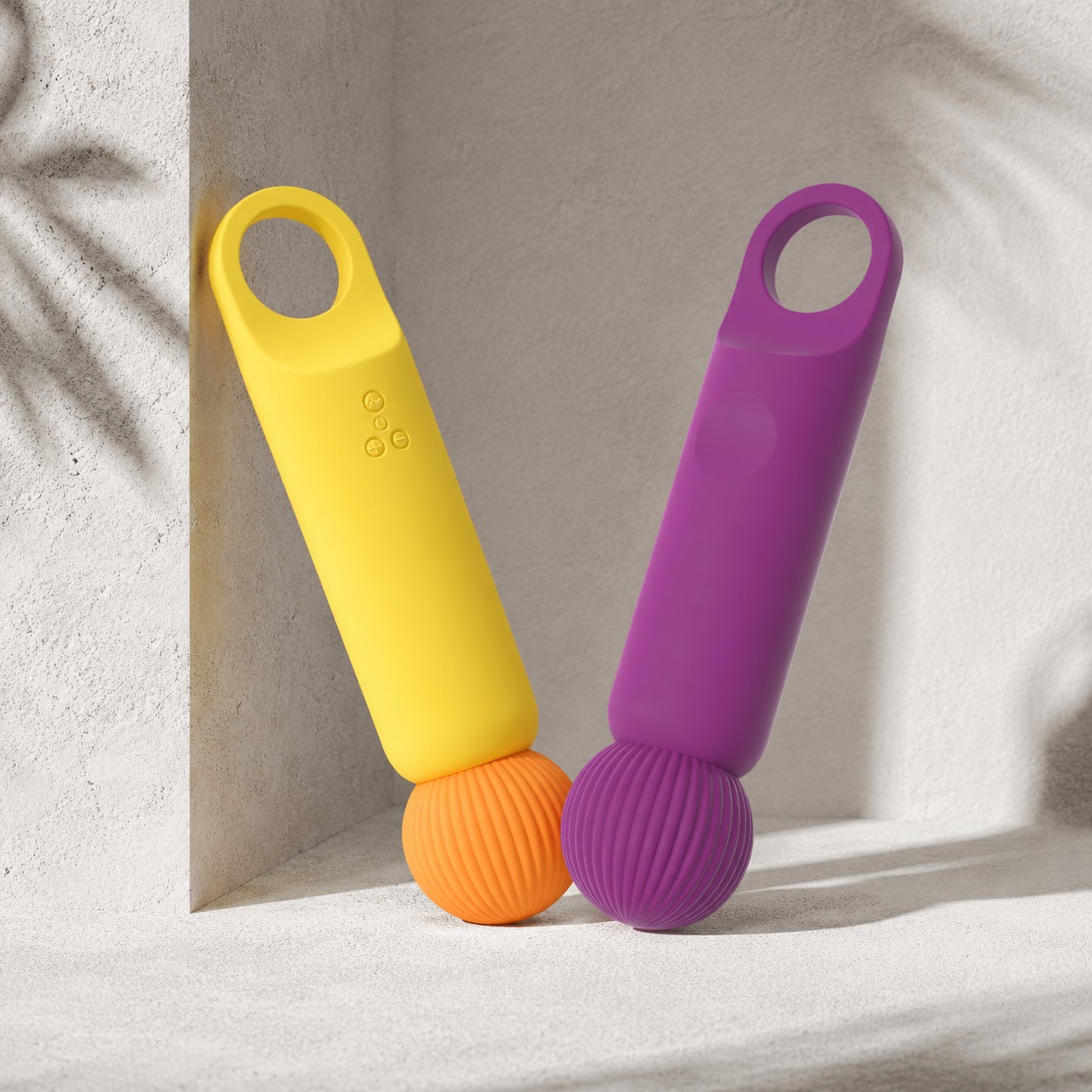
For broader external stimulation, The Joybloom Sola Wand has a wide head and long ergonomic handle. Those features help when holding a smaller device or holding one position starts to feel tiring.
Sola can move across the thighs, the vulva, the clitoral area, and other external zones instead of staying on a single intense point. Start at the lowest comfortable setting, beside the clitoris or through a layer of underwear, before trying direct contact.
For more options designed around this stage, see adult toys for menopause and low libido. If this would be your first product, the First Sex Toy Guide explains how to choose without overcomplicating the decision.
Lubricant
When dryness or friction gets in the way, water-based lubricant can be used with hands or silicone pleasure products. Apply it before friction shows up and add more whenever it starts to drag. The formula is water-based, which means it plays well with silicone toys and washes off without fuss.
Vaginal moisturizer or clinical care
Lubricant provides temporary glide during sexual activity. It is not the same as a vaginal moisturizer, which is used regularly to manage ongoing dryness, and it does not treat GSM.
The NHS recommends water-based lubricant for sexual activity and vaginal moisturizers for longer-lasting dryness relief. NHS
Products should support comfort—not encourage you to push through pain. Before combining products, use Joybloom's Lube Compatibility Checker. Afterward, follow the guide to cleaning and storing sex toys.
When to Ask for Professional Support
It is worth talking to a gynecologist, a menopause specialist, or a pelvic floor physical therapist if you experience any of the following on a regular basis:
- Persistent vaginal or vulvar pain
- Bleeding during or after sexual activity
- Burning, itching or unusual discharge
- Recurrent urinary symptoms
- Dryness that affects daily comfort
- Difficulty with arousal or orgasm that causes distress
- Involuntary tightening that prevents comfortable penetration
Depending on the cause, treatment can include vaginal moisturizers, pelvic floor therapy, counseling, or prescription options such as low-dose vaginal estrogen. The right plan reflects your symptoms, your medical history, and your preferences.
New partners can still pass on sexually transmitted infections after menopause. Pregnancy risk may end, but safer-sex conversations and appropriate protection still matter.
If preferences or comfort have changed, how to communicate your needs in a relationship offers practical language for discussing them.
Frequently Asked Questions
Does menopause always reduce libido?
No. Some women feel less desire. Some feel more interest. Many report little change at all. Hormones are only one of several influences. Sleep plays a part. So does stress. Pain can play a part. Medication can play a part. So can the broader context of a relationship.
Why does arousal sometimes take longer after menopause?
Reduced blood flow, lower natural lubrication, tissue changes, fatigue and medication may affect arousal. More warm-up time is an adaptation—not a sign that your body has failed.
Can women use vibrators after menopause?
Yes, when stimulation feels comfortable. Begin externally and at a low intensity; use lubricant when needed and stop if you experience pain, bleeding, irritation or persistent numbness.
Is lubricant enough for menopausal vaginal dryness?
Lubricant reduces friction during sexual activity. It does not treat ongoing daily dryness. Vaginal moisturizers and prescription treatments can be more appropriate when GSM symptoms are persistent.
Is painful sex a normal part of aging?
Pain can become more common because of dryness, tissue change, or pelvic floor issues. It should never be accepted as inevitable. Persistent pain deserves an assessment and a real treatment plan.
Can orgasm change with age?
It can. Some people need more time, different pressure or more external stimulation. Others notice little change. A different orgasmic response is not necessarily a less satisfying one.
The Takeaway
There is no age at which a woman becomes too old for curiosity, pleasure or intimacy.
Effective sexual wellness after menopause is not about forcing the body to behave as it once did. It is about learning how it communicates now.
Comfort may need more attention. Desire may become more responsive than spontaneous. Pleasure may move away from penetration and toward touch, vibration, closeness or unhurried exploration.
This is not the end of a sexual timeline.
It can be the beginning of a pleasure era defined less by expectation—and more by your own experience.