Hey guys, let me tell you the question I see pop up at least once a week in my DMs.
Someone uses a vibrator, finishes, and then notices that things feel a little muted. Down there. For maybe twenty minutes, maybe an hour. And then the panic sets in.
Did I break something? Am I desensitized? Will I ever feel normal again?
I get it. That quiet panic is real. If you have ever had that thought, you are not alone. And here is the short version, before we get into the weeds.
Temporary numbness can happen. It is normal, actually. But that is not the same thing as permanent nerve damage. The research we have does not back up the idea that regular vibrator use permanently wears out your nerves.
It also does not promise zero risk. Nothing does.
The useful question is not how many times is too many. It is how does my body feel. During. After. Over time.
Let me walk through what the evidence actually says. And where it stops.
The word desensitized means way too many things
Here is the thing about the word desensitized.
It is doing too much work.
Like, if your body feels a little numb for twenty minutes after you finish? That is one thing. It is temporary, it is normal, and the answer is basically just give it a rest.
But if the feeling does not come back after a day or two? That is completely different. That is not something a blog post or a brand email can fix. Go see a doctor.
People mash both of those into the same word, and then everyone panics.
This distinction matters because the same word hides two very different decisions. A few minutes of muted feeling may call for a pause. A persistent change should not be explained away by an article, or by reassurance from a product brand.
What the research actually measured
Okay, let us look at the numbers. And yes, I am going to cite actual studies, not TikTok takes.
There was a US survey of 1,059 women who had used vibrators. 71.5 percent reported never having had genital symptoms they associated with vibrator use.
Some did report symptoms, including numbness. The International Society for Sexual Medicine, or ISSM, summarizes the survey this way: about 17 percent reported numbness at some point, most episodes resolved within an hour, and 0.5 percent reported numbness lasting more than a day.
Let that sink in.
Those numbers are more useful than either internet extreme. They do not support the claim that vibrators routinely cause permanent loss of feeling. They also do not support the idea that numbness never happens.
The survey relied on participants self reports. It was not a long term nerve testing trial that could prove a cause or settle every question about years of frequent use.
There is also a small prospective clinical study that followed women using a genital vibratory device for sexual arousal or orgasm concerns, with assessments at one and three months. At three months, many participants reported increased genital sensation.
That is interesting, right? But the study had no comparison group. It does not show that vibration restores sensation for everyone, and it does not prove that all patterns of use are harmless.
The sensible reading is narrower. Existing research offers reassurance against the dramatic dead nerves story, while leaving room for temporary symptoms and individual differences.
Why your body adjusts, and why that is not nerve death
Let me get a little neuroscience nerdy on you. I promise it is useful.
Your nervous system does not just passively record touch. It adjusts its response to what just happened. When a stimulus is steady or intense, what you feel next may register differently for a while. Researchers call this sensory adaptation.
Research on the human hand shows temporary shifts in vibration perception thresholds followed by recovery. That general principle can help explain why a body part might feel less responsive right after sustained stimulation.
But hold on!
Findings from fingers or other skin cannot be copied directly onto genital tissue. Genital anatomy, stimulation, and context differ. Adaptation is a plausible explanation for some short lived experiences, not a diagnosis for any particular person.
The genital use survey provides the more directly relevant observation, which is that most reported numbness was brief.
You may also hear the word neuroplasticity, meaning the nervous system can change with experience. That does not mean a vibrator permanently rewires your brain, and it certainly does not mean the brain is immune to injury.
Plasticity includes learning and changing responses. It is not a safety certificate. If a particular rhythm or intensity becomes your easiest route to pleasure, that can reflect familiarity, attention, expectation, and preference. It does not, by itself, show that another kind of touch has become biologically impossible.
Think of learning the feel of one favorite song. Recognizing it quickly does not erase your capacity to enjoy different music.
The analogy has limits, but it captures the key point. A preferred input and a damaged sensory system are different claims. If you want more range, you can explore it without treating your current preference as a medical failure.
Does vibration improve blood flow? Sort of, but not how you think
I see this claim thrown around a lot. Vibration improves blood flow, so it is actually good for you!
Hmm. Let us be careful here.
Genital arousal involves changes in blood flow. Researchers have measured increased vulvar blood flow during sexual arousal in a small laboratory study. Vibration can also be used as one form of sexual stimulation in clinical settings. But it would be a leap to say more blood flow proves that frequent vibrator use protects nerves, or that a particular product improves circulation as a medical treatment.
Blood flow is part of the response, not a simple score of tissue health. A person can experience arousal and still have pain or irritation.
Conversely, lower sensation can have many explanations unrelated to their vibrator. Hormonal changes, medications, pelvic or neurological conditions, stress, and other factors can affect sexual sensation.
That is why a persistent change deserves a real clinical conversation rather than a one cause story.
For this article, the blood flow takeaway is modest. The body is active during arousal, and vibration does not use up a finite store of sensation. The evidence does not justify turning that observation into a guarantee about lifelong nerve function.
But I can only orgasm with a vibrator. Is that dependence?
Not necessarily. Let me say that again, slower, for the people in the back.
Not. Necessarily.
A vibrator provides a kind of stimulation that a hand, tongue, or partner may not reproduce exactly. Needing or preferring one route to orgasm is not the same as a substance dependence, and orgasm is not the only measure of satisfying sex.
I think the right questions to ask are different.
Is the vibrator a choice you enjoy? Can you decide when to use it? Does it leave you comfortable?
Or does the pattern feel unwanted, distressing, or disruptive to sleep, work, relationships, or your sense of control?
Those questions are about your lived experience, not a moral rule about frequency.
If you want to share pleasure with a partner, the goal does not have to be quit the toy. You might describe the pressure, pace, or placement you like. You could use a vibrator together if both people want to. Or you could enjoy forms of closeness that do not aim for orgasm. Our guide to introducing a toy to a partner starts with conversation rather than replacement anxiety.
And if you genuinely want to discover other routes, treat it as exploration, not retraining under a deadline. A few sessions with your hands, a different pace, or attention to other pleasant areas may teach you something.
They are not a proven reset protocol, and you do not owe anyone proof that you can climax in a particular way.
What about using a vibrator every day?
This is the one everyone wants a number for. How many times a week is normal? How many is too many?
I wish I could give you a clean number. I really do. But there is no evidence based universal limit, like three times a week, that fits every body and device. ISSM likewise notes that there is no single normal masturbation frequency.
Frequency alone tells us little about pressure, duration, comfort, or recovery. A short, gentle session and prolonged direct stimulation at a level that leaves you sore are not equivalent simply because both happened today.
Use your own feedback as a practical guide.
- Begin with a comfortable setting and location. If direct contact feels too sharp, try a nearby area or a layer of fabric. You can move or stop at any time.
- Notice the feeling while using it. Pleasant intensity and tolerable pressure are personal. Pain, burning, or a numb feeling are reasons to stop, not challenges to push through.
- Check in afterward. If sensation feels muted, take a break rather than immediately increasing power to chase the same response.
- Watch the pattern, not the calendar. If discomfort recurs, use less pressure or a different approach, and seek clinical advice if symptoms persist.
- Keep the device clean and intact. Follow the maker's care instructions, especially before sharing it or changing body areas. Our cleaning and storage guide covers the basics.
These are comfort and harm reduction suggestions, not a medically validated dosage schedule.
There is no requirement to rotate settings or take scheduled days off if you are comfortable. There is also no prize for pushing through a sensation your body dislikes.
How to make intensity a choice, not a default
The most useful anti dependence strategy may be to keep options available.
Before reaching for the strongest setting, notice whether you want intensity, speed, broader contact, or simply less distraction. Those are different needs.
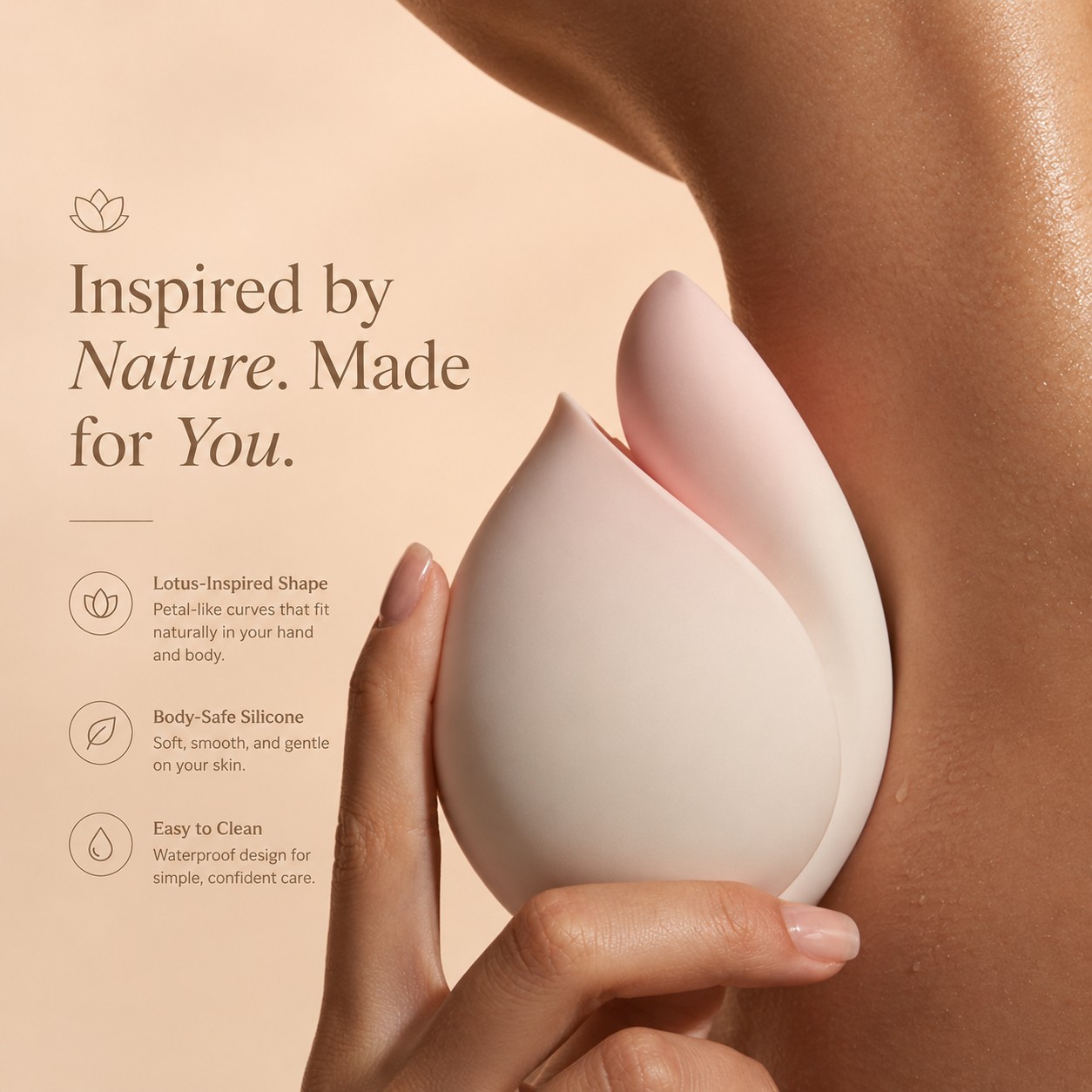
If you are considering a device, compare its controls and shape rather than a claim that it will prevent desensitization. The Joybloom Lola, for example, is listed with one button control and ten vibration patterns, and the product page describes both external and internal use.
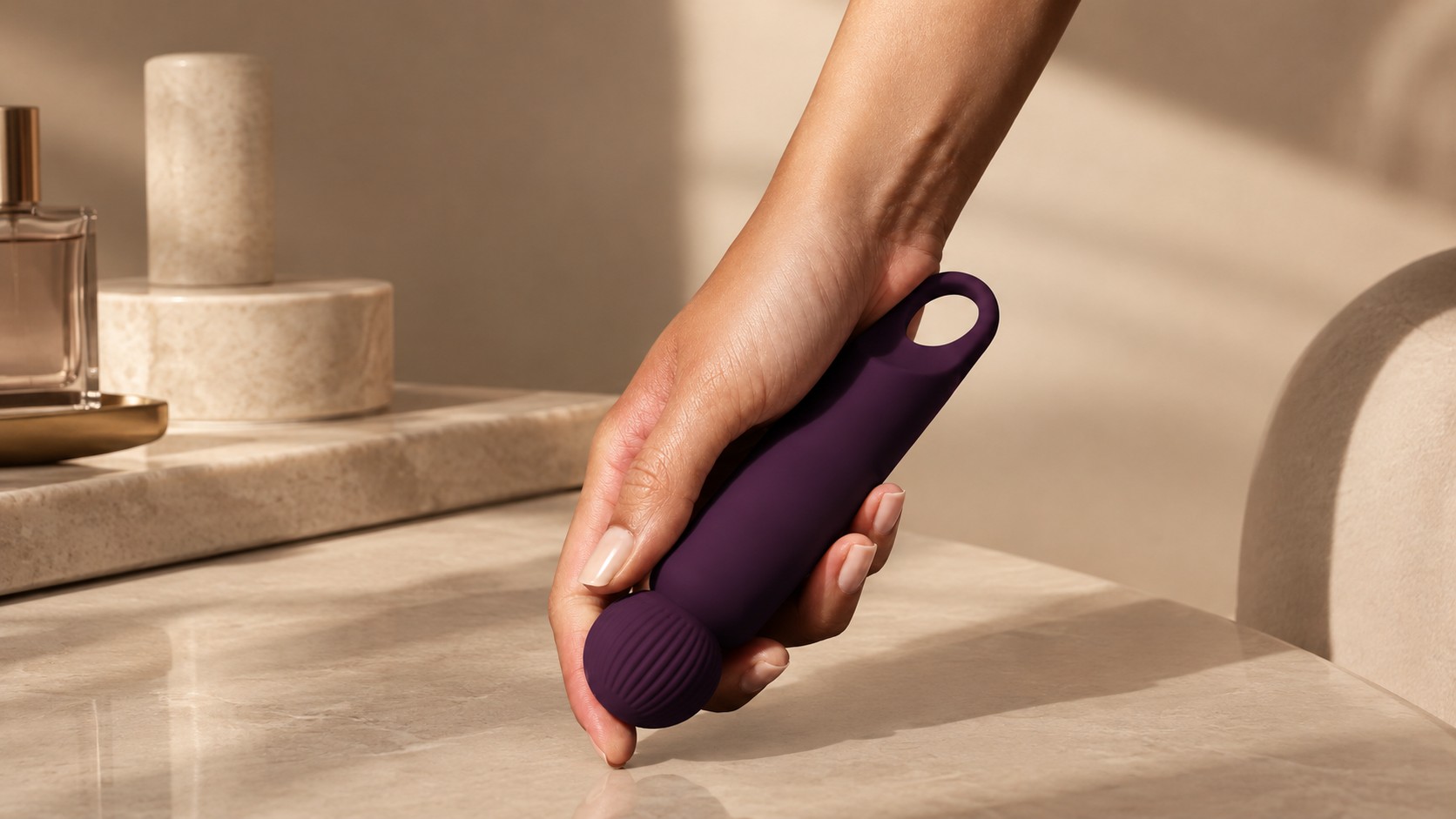
Those features give you ways to change the experience. They do not make Lola a treatment or prove that its vibration is safer for nerves than another product. If you prefer a broader external contact area, choose on that basis instead of assuming stronger is better.
You can also choose no product at all. Hands, nonsexual touch, rest, or a change in setting may be what feels right.
For a more pressure free way to notice the differences between touch, pace, and body feedback, see our self care guide.
When to stop and ask for help
Stop using a vibrator if you feel pain, burning, skin irritation, swelling, bleeding, or numbness.
If symptoms do not settle after a break, repeatedly return, or occur outside use, speak with a qualified healthcare professional. Consider the same if you notice a broader change in sexual sensation that worries you, especially alongside other new symptoms.
A clinician can consider causes that a blog cannot evaluate.
You do not need to wait until a symptom meets some internet definition of serious. Likewise, a single brief episode of muted sensation does not prove damage.
The point is to respond proportionately and without shame.
The bottom line
The vibrators permanently desensitize you story makes a strong claim that current evidence does not establish. Some users do report short lived numbness, and comfort varies.
Sensory adaptation and learned preferences offer useful ways to think about those experiences, but neither neuroplasticity nor increased blood flow can promise zero risk.
If you enjoy frequent use and feel well during and afterward, you do not need to invent a problem because of a myth. If your body signals discomfort, or a change persists, pause and get individual advice.
Pleasure should expand your choices, not make you ignore them.