A personal ritual does not need a collection of bottles or a perfectly styled room.
Honestly.
You can start with one scent you actually like, a comfortable place to sit, and a few minutes without your phone. That is it. Let the fragrance mark a transition: work has ended, and you can pay attention to the room and your body.
If you want touch as part of that moment, a massage candle can add warmth after its flame is out and its oil has been tested on your skin.
The important choice is personal. Lavender is not automatically calming for everyone, and a familiar smell can bring up an unwanted memory as easily as a welcome one.
Choose by association and comfort rather than by a promised effect.
Why can a smell bring back a feeling so fast?
You know that thing where you walk past someone wearing a specific perfume, and suddenly you are ten years old again, in your grandma's kitchen, and you can almost taste the cookies?
That is real. And there is actual research behind it.
Odors can act as cues for autobiographical memory, meaning the ordinary scenes and emotions you remember from your own life.
In a study comparing odor and visual cues, odor cued memories tended to give participants a stronger feeling of being brought back to the original event. Other experimental work on odor and emotion also found that the way a smell is named and understood can affect recall.
But here is what people miss.
That does not mean every scent has a fixed effect on the brain. Your history with a smell matters. One person may associate lavender with a pleasant garden. Another may remember a product they disliked.
The useful question for a home ritual is, what does this scent bring to mind for me?
Scent can also become a cue for a routine you repeat. If you light the same candle while putting your phone away and settling into a chair, you may begin to associate that fragrance with the pause.
This is a practical idea drawn from what we know about odor and memory, not a claim that a candle treats stress, anxiety, or sleep problems.
The National Center for Complementary and Integrative Health notes that benefits of lavender aromatherapy for those conditions remain unclear.
Pick one scent to anchor the room
Think about the mood you want to create, then test what you actually like.
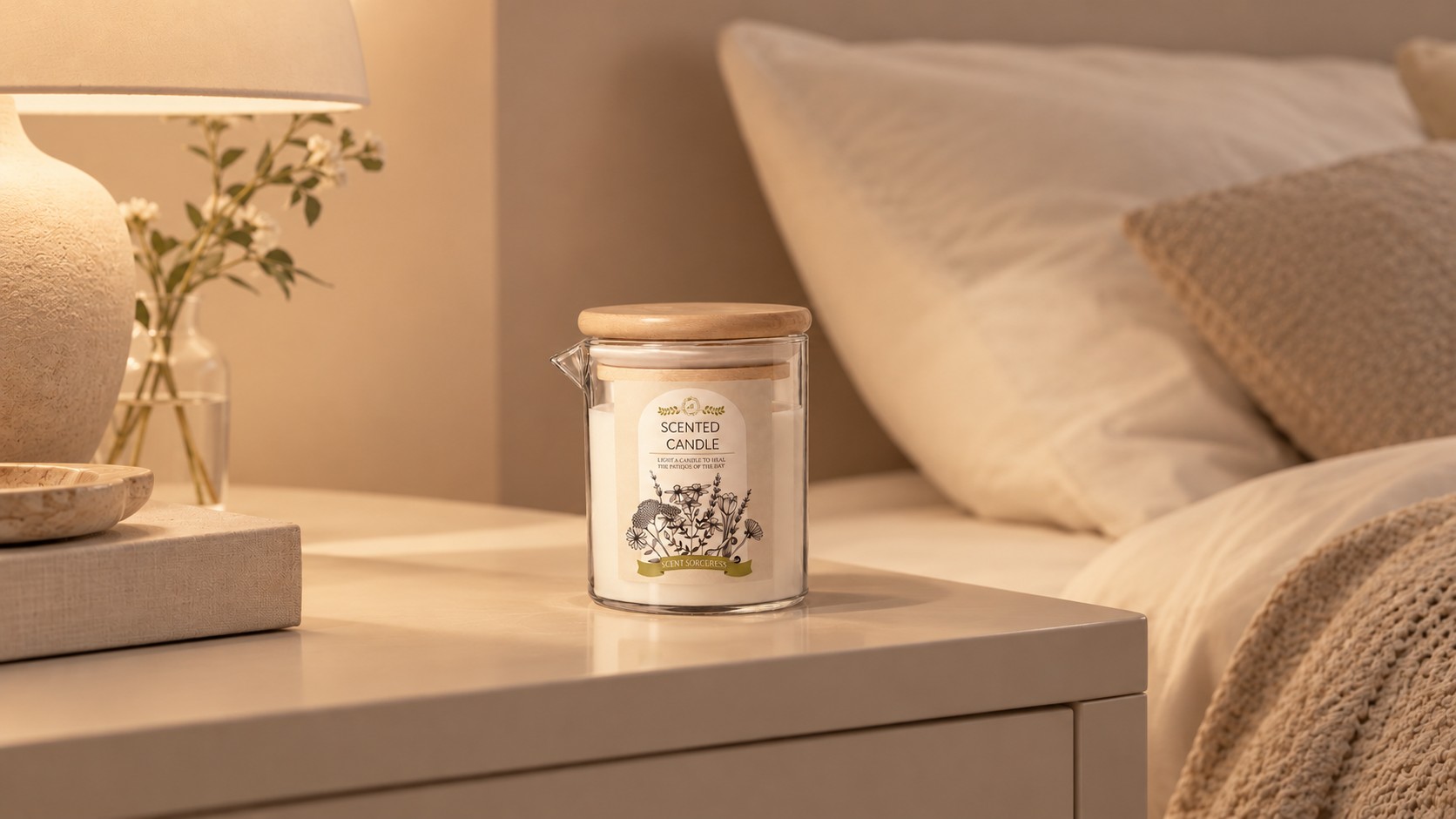
The Joybloom Aromatherapy Essential Oil Massage Candle currently lists Ebony agarwood, Chamomile, and Lavender options. Those names describe choices on the product page. They do not predict how you will feel.
The descriptions in this table are ways to begin choosing, not clinical fragrance categories.
|
If you prefer |
You might start by smelling |
Check your own response |
|
A floral association |
Lavender |
Does it feel familiar or too strong? |
|
A softer herbal association |
Chamomile |
Does it fit the time of day you have in mind? |
|
A deeper wood association |
Ebony agarwood |
Does it make the room feel inviting to you? |
If you can sample a scent before buying, do. If you dislike fragrances or are sensitive to them, a clean, unscented space can be just as intentional.
And one thing I really want to say.
Do not stack several strong fragrances at once. One candle plus a diffuser, scented body oil, and room spray? That is a lot. It makes it hard to tell what you enjoy or what irritates you.
Give a single scent space first. Add another only if it improves the experience for you and anyone sharing the room.
A ten minute candle and massage ritual
This is a flexible sequence, not a timer you must complete. You can stop after the scent and light, or skip the candle entirely.
No rules. Just what feels good.
1. Set the room
Clear a stable, heat safe surface. Keep the candle at least 12 inches from bedding, curtains, paper, and anything else that can burn.
Silence your phone, leave enough light to move safely, and make sure the fragrance is comfortable for everyone present.
The U.S. Fire Administration advises keeping candles away from flammable objects and extinguishing them before you leave a room or go to sleep.
2. Light, then notice
Light the massage candle while you are in the room and let a small pool of oil form, following the product instructions.
Rather than trying to feel relaxed on command, notice three details: the scent, the level of light, and where your body touches the chair or bed.
A thought about work may still appear. Return to one detail when you want to.
That is the whole practice, really. Coming back.
3. Extinguish and test
Put out the flame before touching or pouring the oil. Always.
The Joybloom page says to let the melted oil settle for about two minutes and test a small drop on the inside of your wrist.
Time alone does not prove a safe temperature. Check each time.
Pour a little into your palm for control, then apply it to an area of intact skin that you want to massage. Do not pour it while the wick is burning.
4. Add touch only if you want it
Use slow, light strokes on a shoulder, hand, or forearm.
If you are with a partner, ask where touch is welcome and check again before changing pressure or location.
A few minutes of agreed, comfortable touch is enough.
If warmth, fragrance, or skin contact feels unpleasant, stop and wash the product off as appropriate.
5. Close the ritual
Let the candle cool before replacing its lid or storing it upright, as its product page directs.
Notice whether you want this scent again.
The result might be yes, less next time, or no fragrance today. That feedback is the point of making the space your own.
Where do essential oils and other The Joybloom products fit?
An essential oil in a diffuser, a scented candle, and a massage candle all create fragrance in different ways.
If you use a diffuser, follow its instructions and keep the aroma light enough that you can choose to leave or air out the room.
Do not drip extra essential oil into a burning candle or add undiluted oil to the melted massage blend. The product's full ingredient and allergy information should be checked on its current label before skin use.
Important one here.
The Joybloom candle is sold as a scented massage product. Its melted oil is for the skin areas allowed by its label. It is not an intimate lubricant.
Keep massage oil away from genital mucous membranes, internal use, latex condoms, and toys unless the relevant manufacturers explicitly confirm compatibility.
The CDC notes that oil based products can weaken latex condoms.
If you later use a pleasure product, finish the massage first, wash oil from your hands and any contact area as needed, and use a lubricant intended for that activity.
If your goal is an everyday transition rather than massage, the candle alone may be the right fit. If you want the fragrance and warm touch in one object, its dual purpose may suit you.
The limitation is that a flame, a skin contact oil, and a fragrance each require their own check. A regular decorative candle should never be poured on skin.

What if fragrance does not feel good?
Scent preference is not universal. Headache, coughing, breathing discomfort, itching, rash, or a memory you do not want to revisit are reasons to stop, extinguish the candle, and ventilate the room.
Essential oils and fragranced skin products can cause irritation or allergic reactions in some people. NCCIH describes this risk.
If a reaction is significant or persists, seek medical advice.
You can keep the ritual and change the cue. Open a window, choose unscented lighting, put on one familiar song, or rest a warm towel over your shoulders.
The most useful sensory space is one you want to return to, at a pace your body accepts.