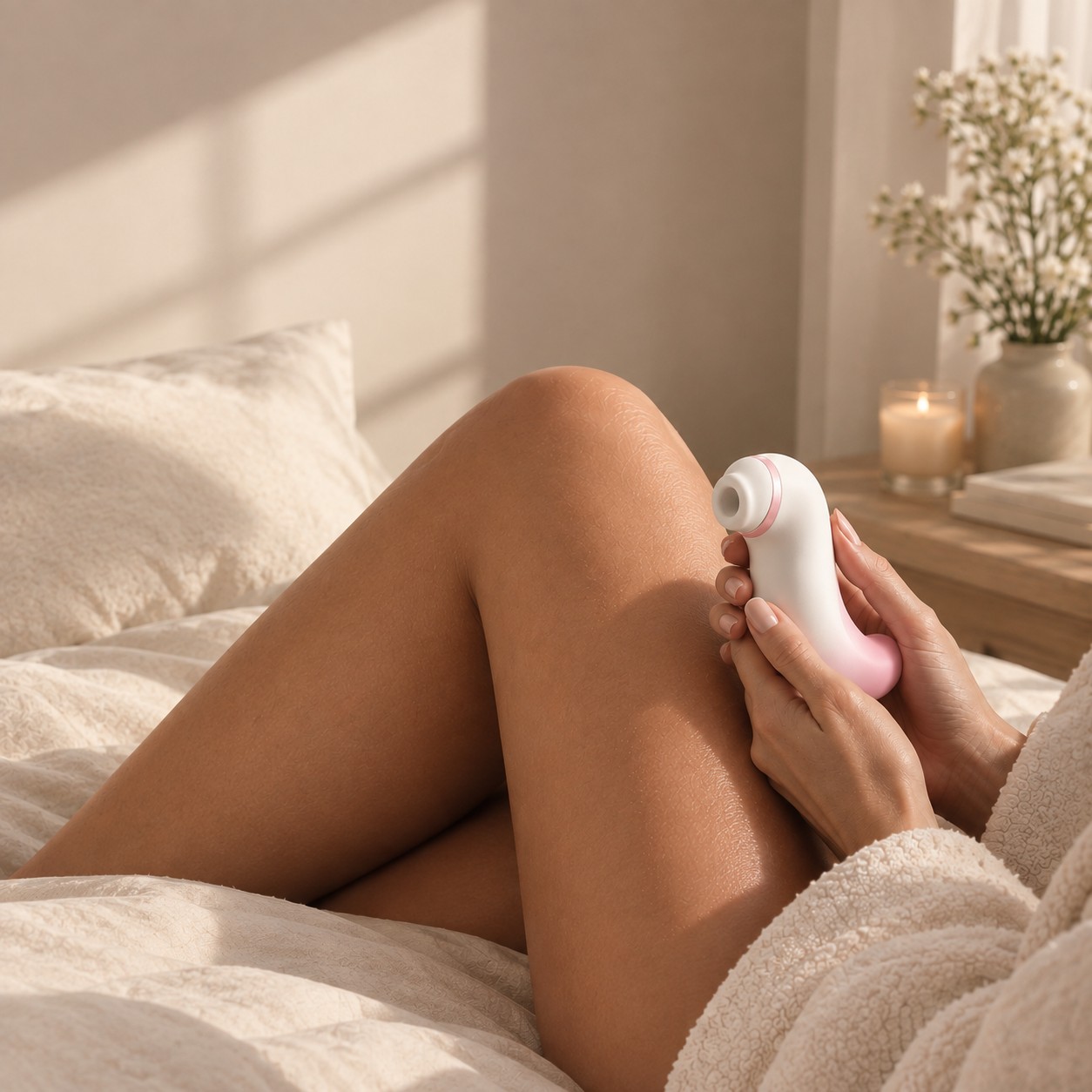
Let me set a scene. You finally have the bed to yourself. The lights are low. You should be unwinding. But instead of being there, your brain is still at the office.
There's that half-written email looped in your head. Tomorrow's meeting is already rehearsing itself. Physically you're under the covers. Mentally you're still sitting under fluorescent lighting.
If this sounds familiar, mindful masturbation might be worth trying. It sounds like a big fancy term, but it's really not complicated. It just means noticing when your attention drifts away from what you're feeling, and gently bringing it back. No required speed. No right way to do it. No toy you have to buy. And you definitely don't have to orgasm.
The whole point is to spend a few minutes actually listening to your body instead of asking it to check one more thing off a list.
I think this lands especially hard if you work a desk job or do creative work all day. A brain that spends eight hours planning, comparing, editing, and troubleshooting doesn't just shut off the second you close your laptop. It needs somewhere to go. Mindful touch gives that overactive mind something physical to hold onto—temperature, pressure, breath, the way the sheets feel—without turning relaxation into another thing you have to perform well at.
What Does “Mindful” Mean Here, Exactly?
Mindfulness gets thrown around a lot these days, so let's strip it down. The basic idea is paying attention to what's happening right now without immediately judging it or reacting to it. The American Psychological Association puts it pretty well: observing thoughts, emotions, and whatever you're experiencing in the moment instead of automatically getting pulled along by them. APA Dictionary of Psychology
When you apply that to masturbation, the shift is simple. You stop evaluating and start noticing.
- Ugh, why am I not turned on yet?
- Is this taking forever?
- I should be enjoying this more.
- I need to finish so I can go to sleep.
- Oh, my brain just went back to that work thing again.
- Light pressure is fine, but firmer pressure is way more interesting.
- My shoulders are still up by my ears.
- I kind of want to slow down / change things up / stop entirely.
It sounds like such a small swap, but it completely changes the vibe. You're no longer trying to force a particular feeling. You're just paying attention to the response that's already there.
If learning what your body prefers feels unfamiliar, Joybloom's guides to clitoris anatomy and female masturbation techniques can add context without creating a performance standard.
Why Your Brain Won't Shut Up During Sex
First off, it's not a personal failure. Unfinished stuff has a way of sticking around in your head on purpose—decisions you haven't made, conversations you want to replay, tasks you're terrified you'll forget. And telling yourself to “just stop thinking” usually just makes you think harder.
What actually works is giving your mind two small forms of reassurance:
Nothing important is going to get lost
Write it down before you start.
Attention can come back gradually
Every time you notice you've drifted, just return to one physical sensation.
The return is the practice. Wandering doesn't mean you're bad at this. One moment of focus doesn't need to last forever, just like one squat doesn't finish a leg day. You notice, you come back, you begin again. That's the whole thing.
Quick reality check before we go further: I don't want to overpromise here. The U.S. National Center for Complementary and Integrative Health notes that mindfulness involves present-moment, nonjudgmental awareness, but also cautions that research quality varies and some benefits have been interpreted more optimistically than the data supports. NCCIH
Mindful masturbation is best thought of as a personal attention practice—not a treatment for anxiety, burnout, insomnia, low desire, pain, or sexual dysfunction.
If work stress is changing your desire as well as your attention, read the pressure-free guide to stress and low libido.
Before You Even Touch Yourself: Close the Mental Tabs
Don't sit down and demand your brain go blank. That never works. Instead, reduce the number of things your brain thinks it has to hold onto.
Make a two-minute “not now” list
Grab a piece of paper and scribble down every task that's buzzing around up there. Don't write full sentences. Just fragments:
Send revised deck. Buy detergent. Reply to Maya. Check Friday train.
Tomorrow: Open deck at 9:15 and revise slide 6.
End with one specific next step for tomorrow, like “Open deck at 9:15 and revise slide 6.” This isn't about being productive. It's about giving your brain a place to put those worries so it can stop carrying them around. When a task pops back into your head later, you can just tell yourself, “It's on the list. I don't need to solve it right now.”
Create a clean transition
Move the laptop out of sight—off the bed, out of the room, whatever it takes. Put your phone on Do Not Disturb. Set an alarm only if having a clear stopping time actually helps you relax (for a lot of people it has the opposite effect). Wash your hands. Adjust the temperature. Grab water, lube, or anything else you might want so you don't have to get up mid-session and re-enter planning mode.
- Move the laptop
- Silence the phone
- Wash your hands
- Adjust the room
- Bring water
- Keep lube nearby
You're not setting up some elaborate self-care ritual. You're just removing the decisions you don't need to make. If the room itself keeps pulling your attention away, these sensory bedroom ideas focus on privacy, light, sound and fewer competing signals.
The Practice: Anchor, Explore, Return
Set aside 10 or 15 minutes, and give yourself full permission to stop sooner if you want. This is a loop, not a checklist. You can cycle through it as many times as you like.
Anchor
Before you go anywhere near the sensitive stuff, pick one neutral sensation to focus on. It could be the weight of your body against the mattress, the warmth of a hand on your stomach, or the feeling of air leaving your nose when you exhale.
Silently name three qualities to yourself: warm or cool, still or moving, light or firm. There are no wrong answers. The labels just give your attention something physical to land on.
Explore
Start with touch that's nowhere near your most sensitive areas. Notice your scalp, your neck, your arms, your chest, your stomach, your hips, your thighs—wherever feels good.
When you do move to genital touch, keep the experiments tiny. Change only one thing—location, pressure, rhythm, or speed—and then notice what happens.
Return
Your mind will wander. Probably a lot. You'll suddenly remember a deadline. You'll start monitoring how close you are to orgasm. You'll start mentally composing a text.
When you notice, name the thought, let it pass, and come back to one sensation.
If closing your eyes makes you feel weird or anxious, keep them open. If focusing on your breath feels stressful, use the feeling of the sheets against your legs or the hum of the AC instead.
During exploration, ask yourself one question at a time:
Do I want lighter or firmer pressure?
Stillness or movement?
A spot I know well, or somewhere I usually skip?
More sensation, less sensation, or a break?
Using lubricant can cut down on annoying friction; just use a product that works for your body and whatever else you're using. Joybloom's Lube Compatibility Checker can help with that choice.
Pleasure might build, fade, stay quiet, or never show up at all. None of those means the practice “didn't work.” Even “I don't really feel like this today” is useful information from your body.
A three-step reset for a wandering mind
- Name it: “Planning,” “rehearsing,” “judging,” or just “thinking.”
- Let it go: Don't argue with the thought. Don't call yourself names for having it. Just notice it and let it pass.
- Come back to one sensation: The pressure under your hand, the warmth of your skin, movement in your pelvis, or the next breath you take.
You might do this ten times in five minutes. That's not ten failures. That's ten moments of awareness. Count 'em and be proud.
When You Feel Totally Disconnected, Try a Sensory Dial
Some days touch just feels… vague. Like you're going through the motions but nothing's landing. Or your thoughts are so loud you can barely feel anything physical. On those days, try the sensory dial exercise.
Pick one dimension—just one—and slowly move it from low to medium, then back down again:
| Dial | What to notice |
|---|---|
| Pressure | Feather-light, gentle, firm |
| Speed | Still, slow, slightly faster |
| Area | Broad contact, smaller circles, one focused point |
| Temperature | Cool air, warm hand, room-temperature lubricant |
| Distance | Beside a sensitive area, over clothing, direct contact |
Pause after each change. Ask yourself, “More, less, different, or done?” It keeps you connected to what you're actually feeling instead of guessing what should feel good.
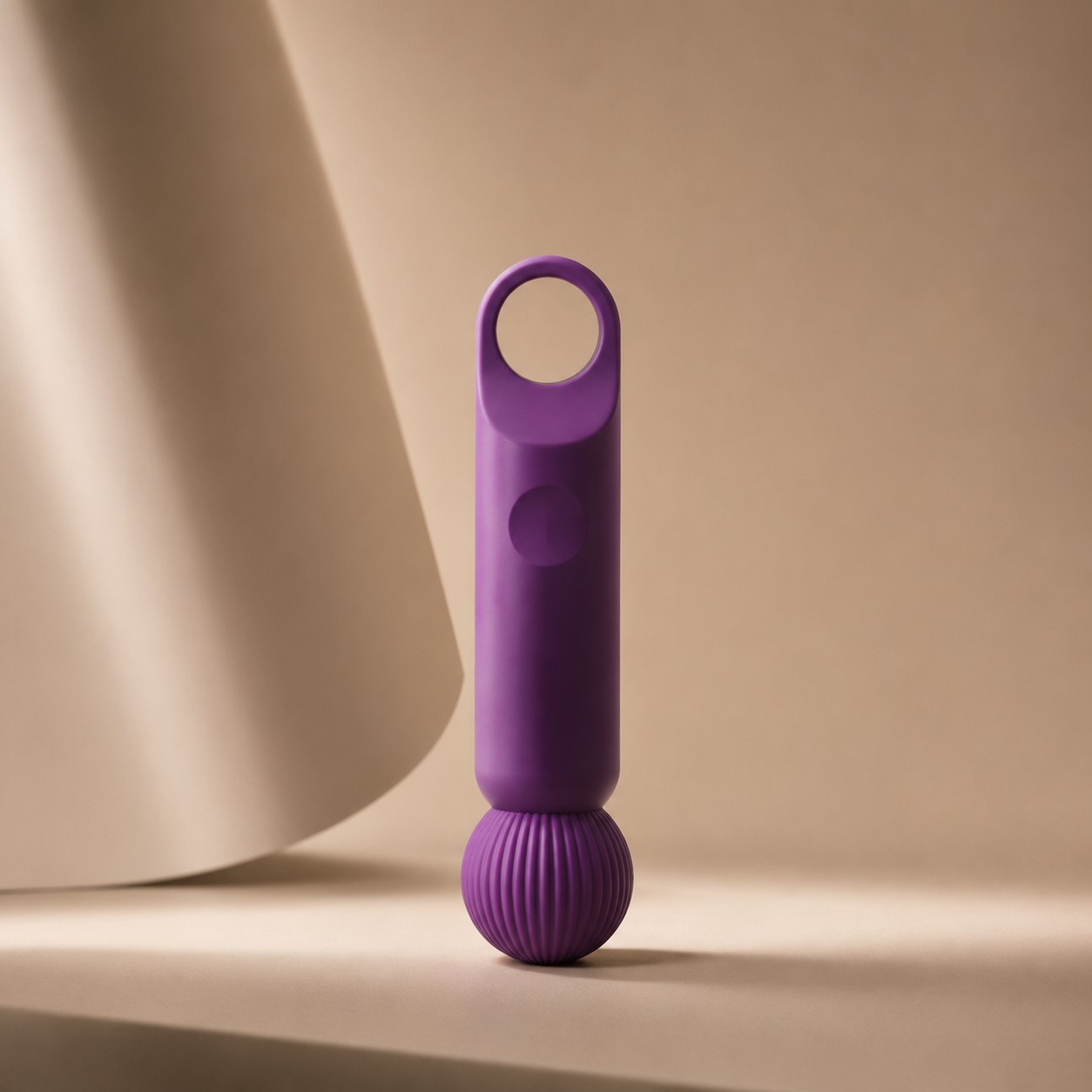
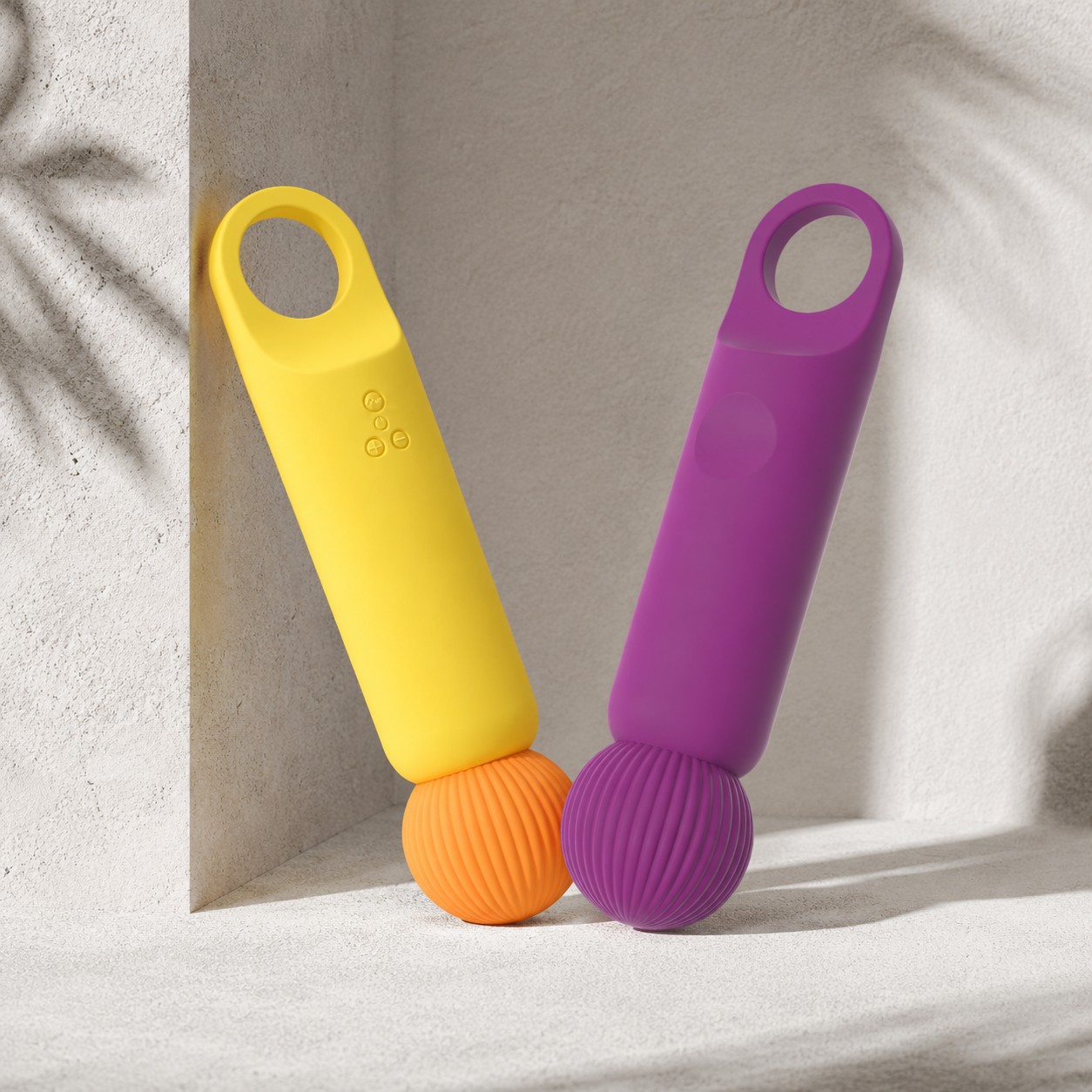
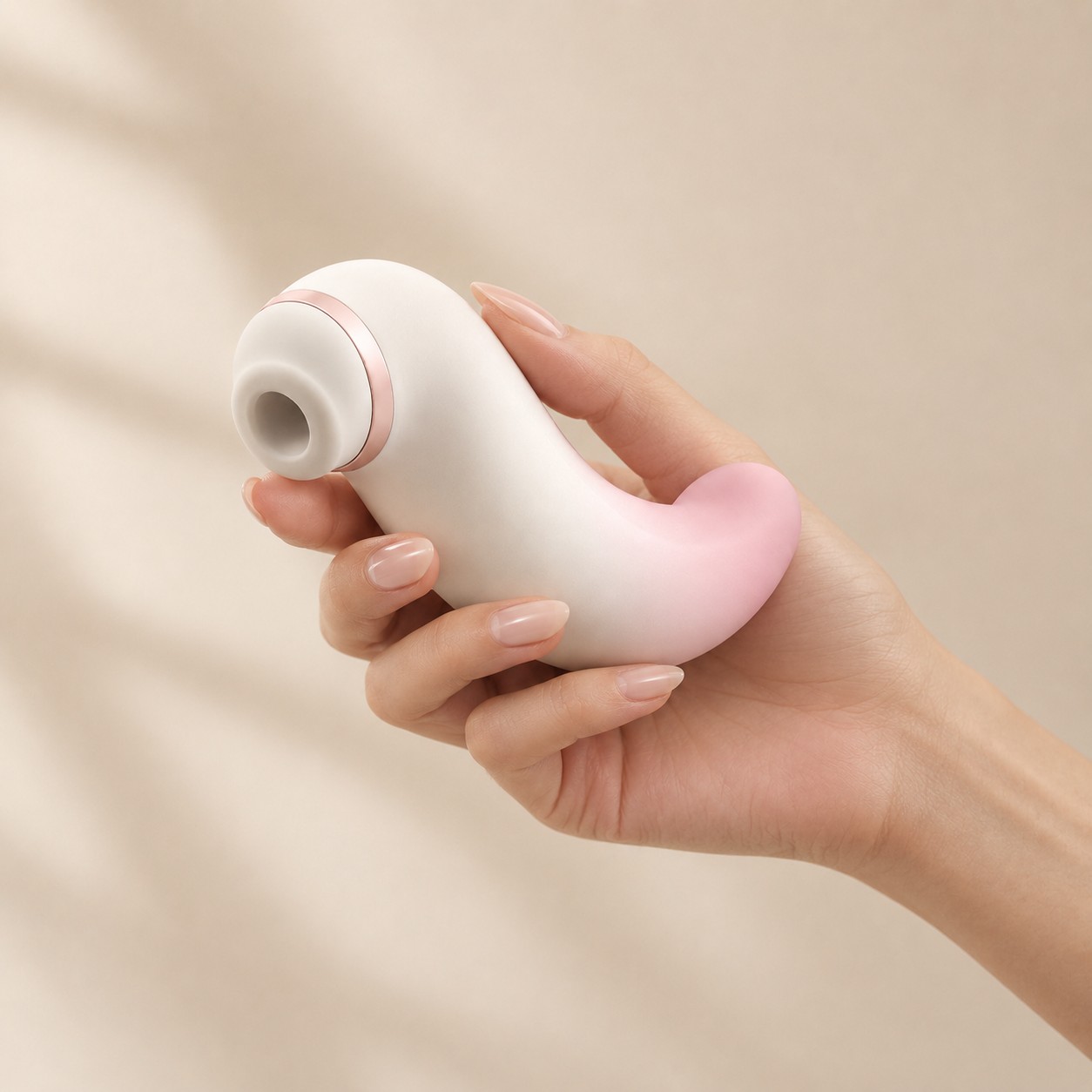
If you're using a vibrator, start at a comfortable setting and treat it as one source of sensation—not a shortcut to a finish line. A simple control layout means fewer decisions your brain has to make.

The Joybloom Lola
The Joybloom Lola, for example, has a single button and works for both external and internal exploration. It's totally optional; hands-only practice is just as valid.
Follow the product instructions, use compatible lubricant, and stop if you feel pain, irritation, or persistent numbness.
If you are deciding whether a product belongs in the practice, the First Sex Toy Guide begins with comfort and intended use. The guide to cleaning and storing sex toys covers the closing routine.
When It Feels Like It's Not Working
“My to-do list keeps coming back no matter what.”
Keep paper within arm's reach. Jot the thought down in five words or fewer, then come back. If the same thing keeps popping into your head, your brain probably doesn't trust a vague note. Write a specific next step and a time for it.
“I can't stop monitoring my progress.”
Swap the question “Am I close?” for a sensory one: “Where is the clearest sensation right now?” If you still can't shake the goal-checking, deliberately pause genital touch for three slow breaths. You haven't lost anything by taking a break.
“I just feel numb. Or bored. Or nothing.”
Feeling nothing isn't failure. Turn the intensity way down and widen the area you're touching. Or just stop. Mindfulness doesn't mean you have to push through when you're just not into it.
“When I slow down, I just get anxious.”
Open your eyes, stop touching, and orient yourself to the room: name five things you can see, and feel your feet or back against something solid.
Mindfulness practices are usually low risk, but they're not for everyone. The NCCIH notes that adverse experiences can happen. If turning your attention inward keeps bringing up anxiety, traumatic memories, or dissociation, consider working with a trauma-informed mental-health or sexual-health professional instead of forcing it. NCCIH
“It hurts. Or it's irritating and won't stop.”
Stop. Pain isn't a mindfulness challenge to power through. Persistent pain, bleeding, irritation, numbness, or a noticeable change in sexual function deserves to be checked out by a qualified healthcare professional.
Stopping is part of listening. If a practice creates anxiety, pain or disconnection, you do not need to complete it. If body monitoring or appearance worries are getting in the way, body image and sexual confidence offers a sensation-first perspective.
How to End Without Immediately Going Back to Work Mode
The last minute matters more than you'd think. Put down whatever you're using, notice the surface you're lying on, and take one easy breath. Clean and store toys according to their instructions. Then let yourself have one simple observation—“slower pressure felt better,” “I was too tired for this,” or “my jaw finally unclenched when I exhaled.”
The surface beneath you
Clean and store what you used
One observation, without grading it
And don't grade the session. Orgasm might happen, but it's not proof you were “present.” And getting distracted a bunch doesn't cancel out the moments when you did come back.
If what you're actually looking for is a broader self-care routine rather than an attention-specific practice, our guide to making self-pleasure part of sexual self-care has more ideas. If you want to describe what you learned to a partner, see how to communicate your needs.
The Takeaway
For a busy brain, relaxation almost never starts with perfect silence. It starts with having somewhere safe to put your attention.
Mindful masturbation is a simple loop: write down what can wait, anchor yourself in one physical sensation, explore without chasing a particular outcome, and come back whenever your mind wanders.
It doesn't need to be intense, or long, or orgasmic to be worth doing. You're just practicing the difference between thinking about your body and actually listening to it.