You turn the lights down. Someone you trust moves closer.
Maybe you want to be present for it. Maybe the moment is even nice. And still, your attention slips outside your body:
Your body may be receiving warmth, but your mind is still watching, judging, and editing the experience from across the room. It is one of the most common things readers and friends describe to me. The feeling usually has a quieter source: a critic sitting in the room, taking up most of the attention.
Building sexual confidence begins with noticing that your appearance is not an issue for comfort, intimacy, or pleasure.
Body Shaming and Body Shame Are Different
These words get used as if they were the same. However, they are not.
Body shaming
Body shaming is what other people do. It is the comment a relative made at dinner. The joke a classmate made in middle school. The partner who said something they later insisted was a joke. The healthcare professional who commented on weight in a way that had nothing to do with the visit.
Body shame
Body shame is the echo that stays afterward.
It can grow from a single remark or from years of being surrounded by the same narrow images and the same quiet message: only certain bodies deserve to be wanted.
In the end, the external critic even does not need to exist. Because the voice has already become part of your own inner talk.
You may avoid mirrors, photographs, changing rooms, dating, or physical closeness. Or you may check yourself from every angle, looking for reassurance that never quite holds.
Both ways mean your body has become tied to evaluation, not that something is wrong with your body. The two can be untied. A pressure-free approach to sexual self-care and body awareness can support that shift.
How Body Image Can Affect Sexual Experience
Body image is more than an opinion about how you look. It includes the thoughts, feelings, and physical experiences that come with living in your body.
A 2024 systematic review found that body image and genital self-image were associated with several aspects of female sexual function. Negative self-perception may contribute to distraction, avoidance and difficulty remaining engaged with sensation. Because much of the available research is observational, it cannot prove that body image alone causes sexual difficulties. Journal of Sex & Marital Therapy
During intimacy, body shame can pull you into a self-monitoring loop:
- 01You imagine how you look
- 02Anxiety increases
- 03Muscles become tense
- 04Sensation becomes harder to notice
- 05Reduced arousal appears to confirm that something is wrong
The problem is rarely that your body cannot feel pleasure. The mind is sending limited attention to appearance instead of to experience or to explore. Stress can make that attention gap wider; the guide to stress and low libido looks at the same pattern from another angle.
What CBT Says About Body Shame
Cognitive behavioral therapy, often called CBT, is based on a simple idea: thoughts, emotions, and behaviors feed one another.
A thought can spark an emotion. That emotion can lead to avoidance or checking. The behavior may give a moment of relief while keeping the original belief in place.
The NHS describes CBT as a way of noticing these cycles and finding more useful ways of thinking and responding. NHS
A body-shame cycle may look like this:
CBT does not demand that you replace the thought with “My body is flawless.” A more honest goal is to look at whether the thought is a fact, an assumption, or a rule you picked up somewhere.
Try a CBT-Informed Thought Record
The NHS describes a thought record as a common CBT exercise for capturing a situation, identifying the related thought and examining the evidence before developing a more balanced perspective. NHS Thought Record
Begin with one specific moment rather than your entire relationship with your body.
Then examine the thought:
- What factual evidence supports it?
- What factual evidence does not support it?
- Am I assuming I know what another person thinks?
- Am I treating one feature as a judgment of my entire body?
- Would I apply the same standard to someone I care about?
A balanced thought might sound like
“I feel self-conscious about my stomach, but I cannot read my partner’s mind. Their touch may be an expression of closeness. I can remain present for a few seconds and decide what I want based on the sensation.”
A balanced thought only needs to be believable enough to open another possible response.
Turn the New Thought Into a Small Experiment
Thoughts loosen up when behavior offers new information.
Pick an experiment that feels uncomfortable but is small enough to actually try:
- Leave one soft light on instead of complete darkness
- Wear something comfortable rather than something chosen to hide your shape
- Allow a trusted partner to touch one area you usually cover
- Remain present for three breaths before deciding whether to continue
- Describe one sensation without commenting on appearance
The point is to see whether the feared result actually happens and whether you can stay in the feeling without leaving the room.
Consider Body Neutrality Instead of Forced Positivity
I love every inch of my body, which can feel impossible when you currently believe the opposite.
Body neutrality offers a softer middle ground. It focuses on respecting the body and noticing what it does for you, without demanding constant admiration.
Cleveland Clinic psychologist Susan Albers describes body neutrality as an approach based on acceptance and respect rather than needing to love or hate the body. Cleveland Clinic
A body-neutral statement might be the following:
“This is my body today.”
“My body does not need to be beautiful every minute.”
“My stomach can be soft and still deserve gentle touch.”
“These thighs allow me to feel pressure and warmth.”
“My vulva does not need to resemble an edited image.”
“I can dislike a photograph without rejecting my entire body.”
Neutral language creates space between appearance and worth. Clearer, nonjudgmental knowledge can help too; the scientific map of clitoris anatomy focuses on variation and function rather than comparison.
Reduce the Behaviors That Feed Shame
Body shame often survives through repetition.
You check the mirror from every angle. Compare an unposed body with a curated image. Pinch the same area. Ask a partner for reassurance, feel better for a moment, then ask again.
Cleveland Clinic notes that body checking exists on a spectrum and can turn harmful when it becomes compulsive, feeds anxiety, or gets in the way of daily life. CBT can help separate thoughts from facts and check whether the checking is actually useful. Cleveland Clinic
For one week, notice when checking occurs:
- What happened right before it?
- What were you hoping to confirm?
- How did you feel five minutes afterward?
- Did checking provide lasting reassurance?
Then add a little friction. Move the scale. Unfollow the account. Stop using the camera to inspect your body. Cover the mirror that mostly functions as a checking tool.
This is a boundary with compulsive evaluation.
Move From How the Body Looks to What It Feels
Pleasure happens through sensation, not through seeing yourself from the most flattering angle.
Try a three-sensation practice. Without using appearance words, identify:
For example:
“The sheets feel cool. My back feels supported. The pressure on my thigh feels warm.”
When an appearance judgment comes back, name it. That is the body-shame thought. Then return attention to a physical sensation.
You are not arguing with the thought. You are choosing where your attention goes.
Let a Pleasure Tool Support Sensation, Not Appearance
An intimate product cannot rebuild self-esteem, undo social conditioning, or treat body dysmorphic disorder. I want to be clear about that up front.
It can offer a steady, predictable sensation that makes it easier to practice staying inside the body, instead of watching it from the outside.

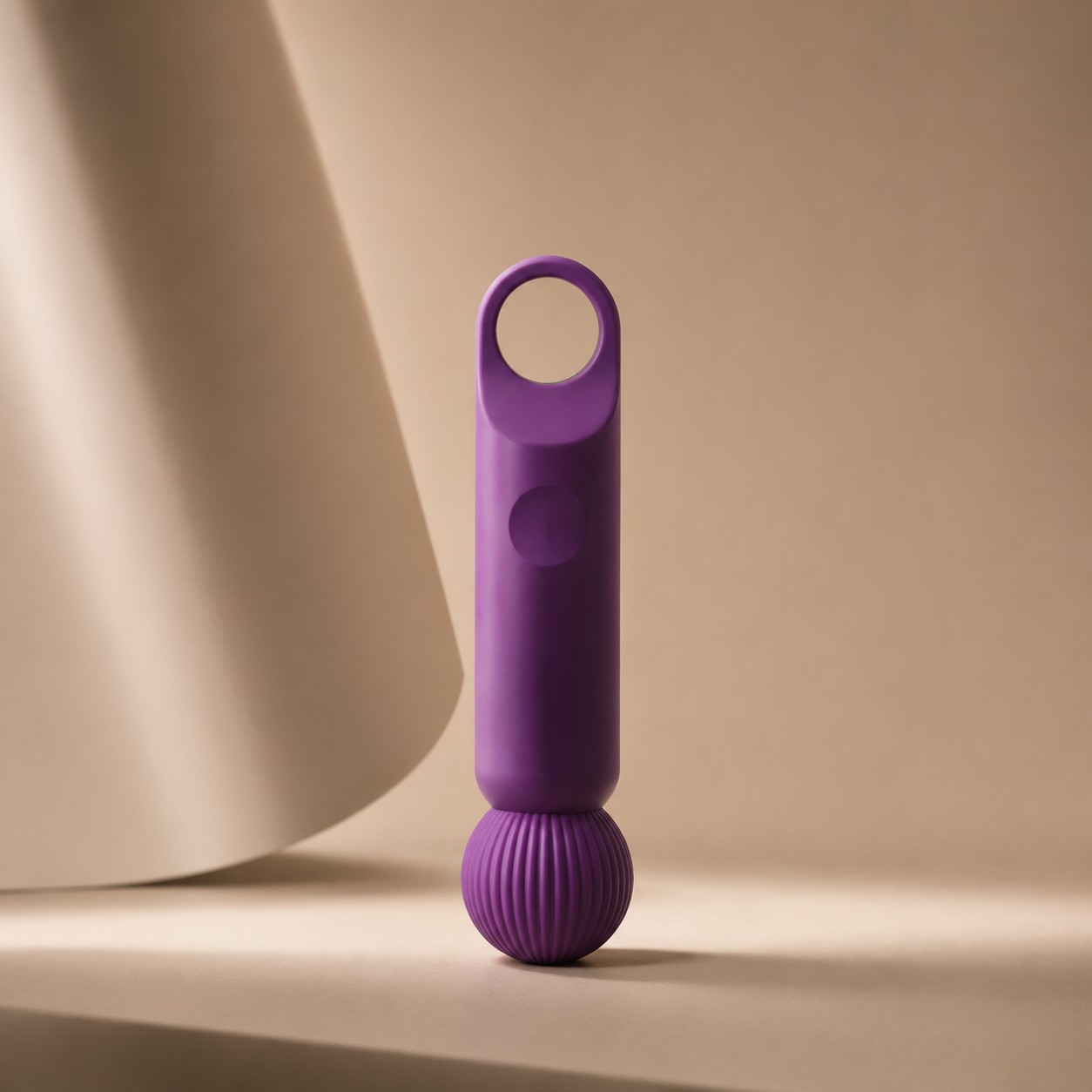
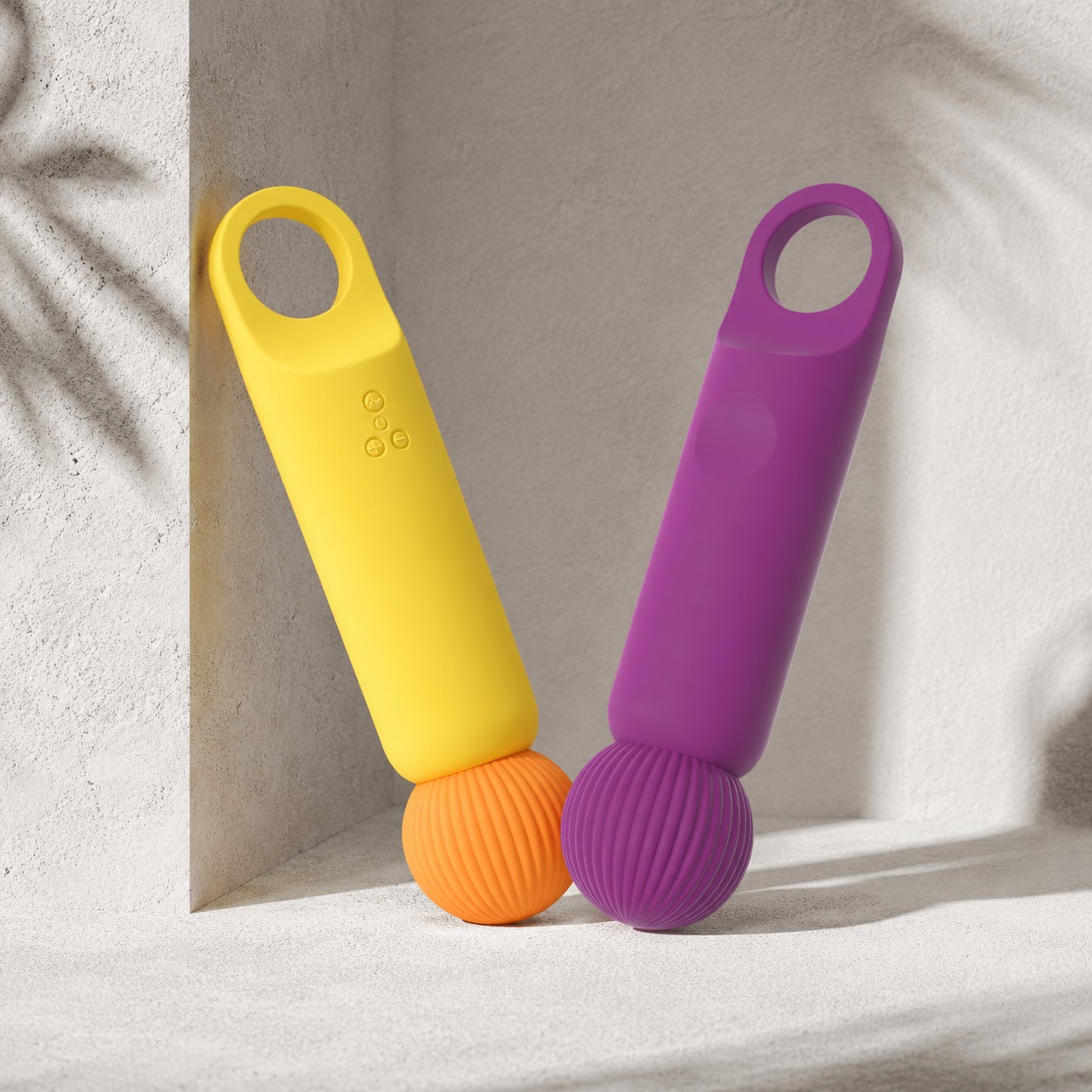
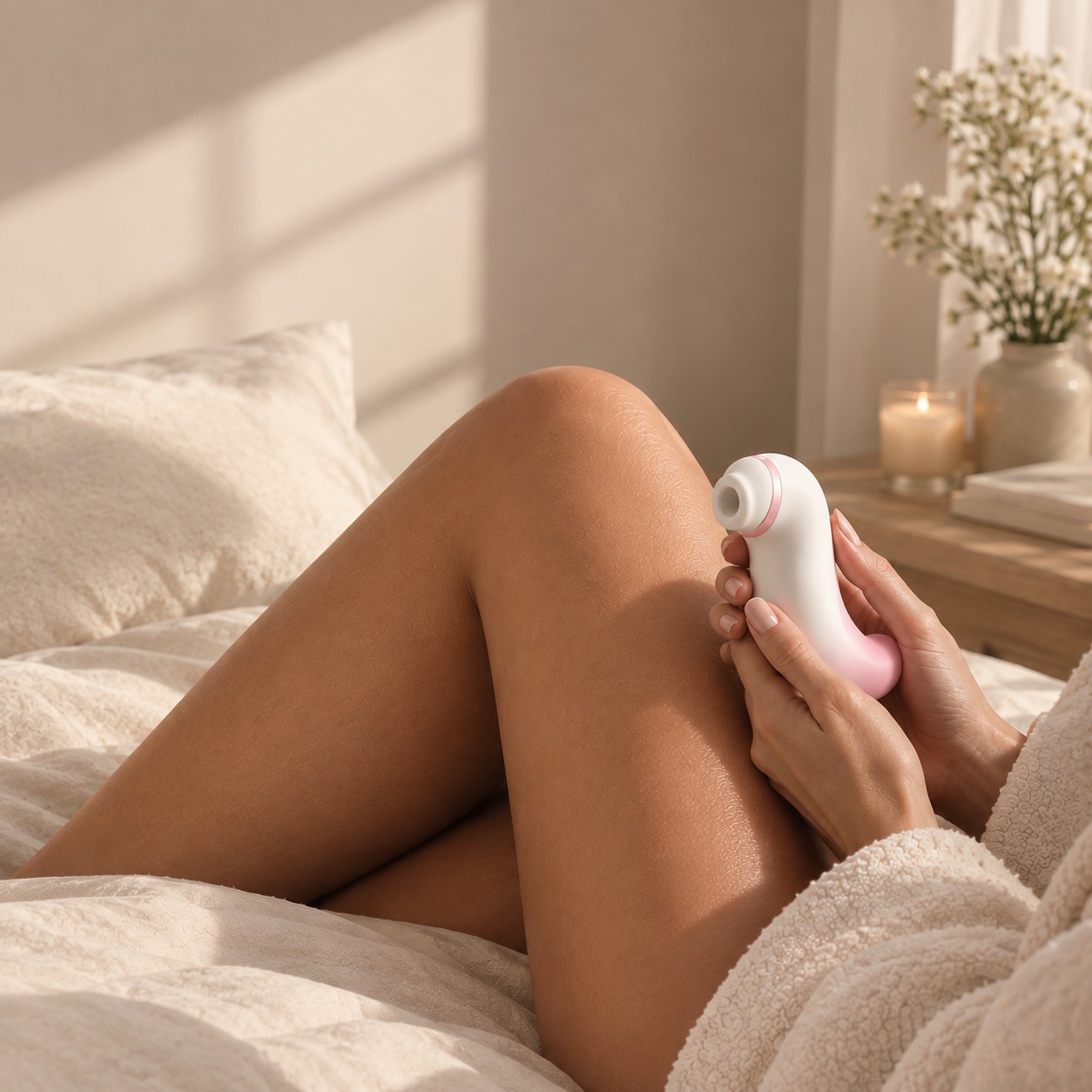
The Joybloom Sola Wand has a broad head and long handle designed for external use. Instead of beginning immediately at the genitals, you can move it slowly across the shoulders, inner thighs, hips or other areas that feel safe and accessible.
Start at the lowest comfortable setting. Notice pressure and vibration without asking whether your body looks attractive while receiving them. If curiosity develops, the wand can move toward the vulva or clitoral area. If it does not, a nonsexual body massage is still a complete experience.
Sola produces strong vibration and may not suit highly sensitive or painful tissue. Stop if you experience discomfort or persistent numbness.
The product is not there to make an imperfect body acceptable.
It is there to remind you that a body can be experienced—not only observed.
If you choose to use a product, check the Lube Compatibility Checker and follow the guide to cleaning and storing sex toys after use.
Ask Partners to Remove Evaluation From Intimacy
Supportive partners cannot erase body shame, but they can stop reinforcing it.
Try saying:
“When you compliment my appearance, part of me still feels evaluated. It helps when you tell me what you enjoy about being close to me or ask how the touch feels.”
Useful partner language may focus on connection and consent:
“Does this pressure feel good?”
“Would you like more or less?”
“I enjoy being close to you.”
“We can keep the light wherever you feel comfortable.”
“Nothing needs to happen next.”
A partner who insults your body, pressures you to change it or uses your insecurities to control sexual access is not providing a safe environment for body acceptance.
The guide to communicating your needs without pretending offers a longer conversation framework. If a product is part of the conversation, read how to introduce a sex toy without making a partner feel replaced.
When Body-Image Concerns Need Professional Help
Consider speaking with a licensed mental-health professional if body-image distress:
- Takes up most of your day
- Leads to compulsive checking or grooming
- Causes you to avoid work, relationships or healthcare
- Affects eating, exercise or sleep
- Produces intense distress during intimacy
- Involves a fixed belief that a small or unobservable feature is severely defective
- Is connected to trauma, self-harm or suicidal thoughts
CBT may be useful, but treatment should match the underlying concern. Body dysmorphic disorder, eating disorders, depression and trauma require proper assessment rather than generic confidence advice.
Frequently Asked Questions
What is the difference between body shaming and body shame?
Body shaming is judgment directed at someone's appearance. Body shame is the internal feeling of defectiveness or embarrassment that can grow from those messages.
Can CBT improve body image?
CBT may help people recognize automatic thoughts, challenge distorted assumptions and change avoidance or checking behaviors that maintain body-image distress. Severe symptoms should be treated with a qualified therapist.
Do I have to love my body to enjoy intimacy?
No. Body neutrality allows you to respect and experience your body without considering it beautiful at every moment.
Why do I lose arousal when I think about my appearance?
Appearance monitoring competes for attention and may increase anxiety and muscle tension. Returning attention to breath, pressure, temperature and touch may help you remain present.
Can a vibrator improve sexual confidence?
Yes. A vibrator cannot create self-acceptance. It may provide predictable sensations that help you learn preferences and practice focusing on physical experience.
How can a partner help with body shame?
A partner can avoid critical comments, remove performance pressure, ask about comfort and focus compliments on connection and shared experience rather than evaluating individual body parts.
The Takeaway
Your body does not need to become perfect before it becomes eligible for pleasure.
You may not love every photograph. There may still be days when an old comment returns, or an edited image shifts how you see yourself. That is human, not a failure.
Recovery is learning that those thoughts do not have to run the light, the touch, the clothing, the relationship, or whether you are allowed to feel good.
Perfection is an appearance standard.Pleasure is an experience.