You finish the presentation. Clear the notifications. Reply to the message marked urgent.
By the time the evening is yours, your mind is still running, but the rest of your body has clocked out. Touch starts to feel like another request. Sex starts to feel like another task, one that needs energy, attention, and a successful outcome. Even when you love your partner, you may want silence more than closeness.
I hear this a lot, from readers and from friends. The phrase that comes up most often is burnout, even though that is not a clinical term. The feeling is real anyway. Long weeks of pressure, exhaustion, and emotional load can make desire hard to reach.
The fix is rarely trying harder.
When stress and low libido show up together, recovery usually starts with removing demands. You make a little room first, and sensation gets a chance to come back on its own.
Stress Does Not Mean Your Body Is Broken
Libido moves with sleep, mood, hormones, medication, how safe you feel, and what your week has looked like. Work stress is one of many things that can pull it down. It is rarely the whole story.
The Mayo Clinic lists work stress, anxiety, depression, past negative sexual experiences, and relationship tension among the factors that can lower sexual desire. So if you've been blaming yourself, that is one place to put the blame down.
When stress is high, two things tend to happen at once.
Attention narrows
If your brain is rehearsing tomorrow's meeting, it has very little left for the soft signals your body is sending.
The body can get quieter
One study in the Journal of Sexual Medicine found that women with higher chronic stress had lower genital arousal than women with average stress. The researchers pointed to both mental distraction and hormonal load as possible reasons. The study showed a link. Not every stressful job leads to sexual symptoms. Journal of Sexual Medicine
Your body may not have “lost” desire. It may simply be prioritizing everything that still feels unresolved.
Why High Performers Can Feel Numb After Work
If you're the person who keeps things running at work, you probably learned early to override body signals. You push hunger past the meeting. Ignore the tight shoulders until the headache lands. Stay sharp through the fatigue. Move from one decision to the next without noticing what any of it felt like.
Over time, you end up living mainly from the neck up.
When work ends, your nervous system doesn't automatically get the memo. The laptop closes, but the jaw, the belly, the pelvic floor are still braced.
That is part of why a candlelit dinner or a date night doesn't always bring desire back. The calendar opened a window. The body hasn't finished shifting out of duty mode.
Low Desire Is Not Always a Problem to Fix
There is no required amount of sexual desire. Anyone who tells you otherwise is selling something.
Low libido becomes a health concern when the change causes you personal distress, affects your well-being, or puts real strain on a relationship. The Cleveland Clinic notes that libido naturally shifts through life and that stress, fatigue, depression, medication, health conditions, and relationship factors can all play a role.
If you feel content without sex, you do not need to manufacture interest to meet someone else’s definition of normal.
If you miss feeling curious, connected or responsive, however, the following approach may help you create room for desire to return. Joybloom's guide to sexual self-care and body awareness offers a related, pressure-free perspective.
Stop Asking, “Do I Want Sex?”
After a draining day, do I want sex? can feel way too big. Most of us can't answer a question that size.
Do I have capacity for one pleasant sensation?
That sensation might be warm water across your shoulders, soft fabric against the skin, a longer exhale or a hand resting on your belly.
Other times, it only arrives after a few minutes of safe, comfortable sensation has already begun.
Responsive desire is not permission to keep going if you don't want to. If nothing wakes up, you stop. The point is to notice what your body is doing, not to force an outcome.
Create a Transition Before Creating Intimacy
Going straight from email to eroticism asks the body to change states way too fast.
Build a ten-minute buffer that has no sexual goal at all.
- Change out of work clothes
- Place the phone in another room
- Dim the lighting
- Take a warm shower
- Stretch the neck, hips and lower back
- Let the exhale last slightly longer than the inhale
Do this before deciding whether you want intimacy.
If the ritual quietly turns into a sex-must-follow rule, it will start to feel like one more work process. Keep the option to end the routine and go to sleep. If sleep itself has become part of the question, read what research says about orgasm and sleep without treating either as a requirement.
Rebuild Sensation Before Chasing Arousal
Numbness, whether emotional or physical, doesn't usually respond to a demand for intense stimulation.
Start with neutral or pleasant areas. Notice the temperature, the pressure, the texture.
- The scalp
- The hands
- The shoulders
- The belly
- The feet
- The thighs
You could put on body lotion slowly. Massage your own hands. Lie under a weighted blanket for a few minutes. Practice receiving sensation without analyzing it or trying to perform.
Once that feels easy, you can move toward the chest, the inner thighs, the vulva, or wherever you like. Only if curiosity shows up.
Use Mindfulness as Attention, Not Another Task
Mindfulness doesn't need an empty mind. In this context, it just means noticing when your attention has wandered off, and gently bringing it back.
A controlled study of 117 women seeking help for low desire or arousal used four structured group sessions combining mindfulness, cognitive therapy and sexual education. The treatment group reported improvements in desire, arousal, and overall satisfaction. This was a clinical program, so it shouldn't be taken as a promise that a few deep breaths will fix low libido. It does suggest that the body learns when the conditions support it. Behaviour Research and Therapy
On your own, you can practice a small version:
- Where your muscles soften
- Which thoughts interrupt sensation
- Whether touch feels pleasant, neutral or irritating
- When you want to continue
- When you want to stop
The success of the exercise is awareness, not orgasm.
Invite Curiosity Without Demanding a Result
If you ever want to explore on your own without coordinating with a partner, a small, intimate product can take one thing off your plate. You don't have to explain what you like. You don't have to perform. You can stop whenever you want.

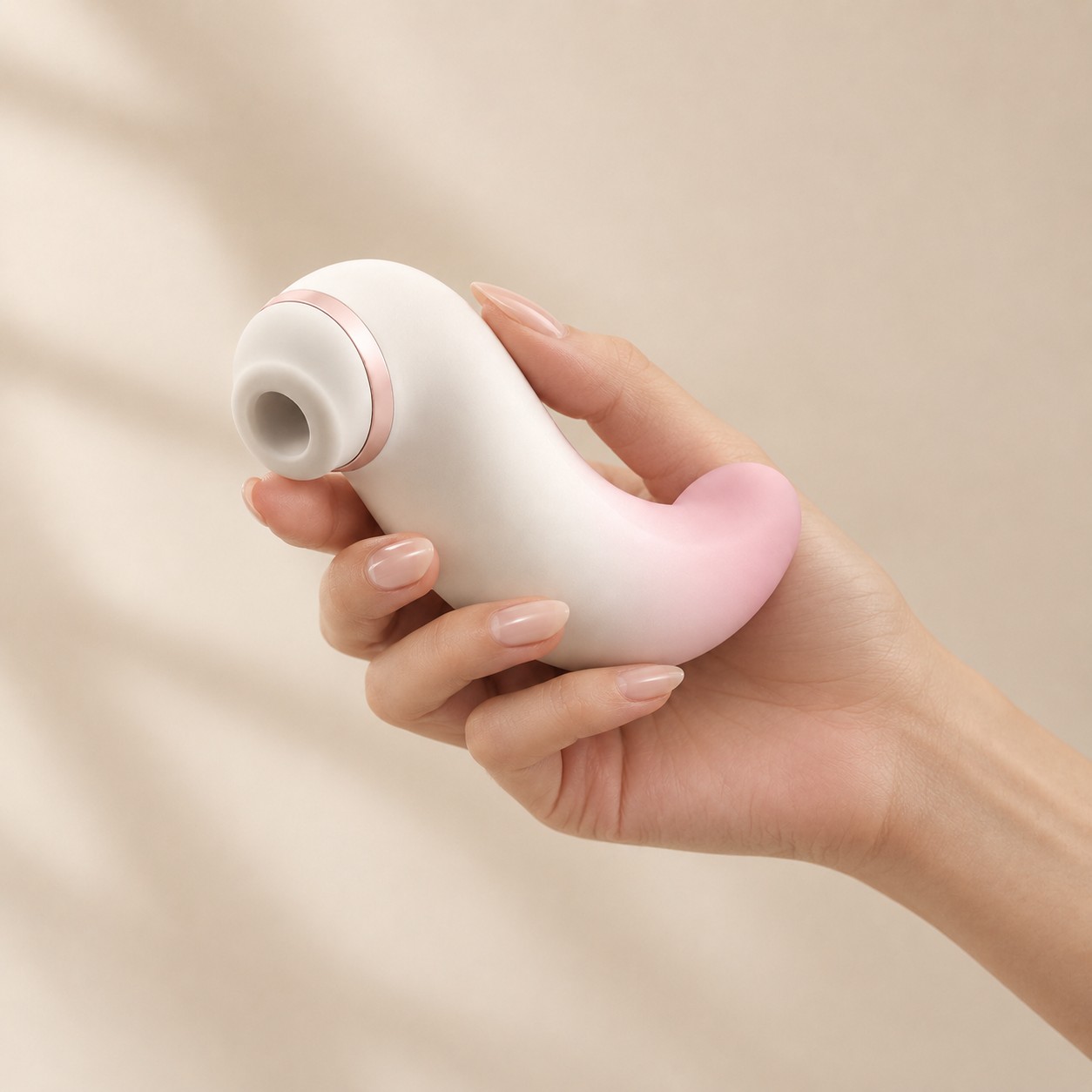
The Joybloom Aura: Natural Cloud is designed with a discreet cloud-shaped form and offers multiple levels of external pulse and vibration. For someone whose mental bandwidth is already depleted, its intuitive controls can reduce the effort required to explore different sensations.
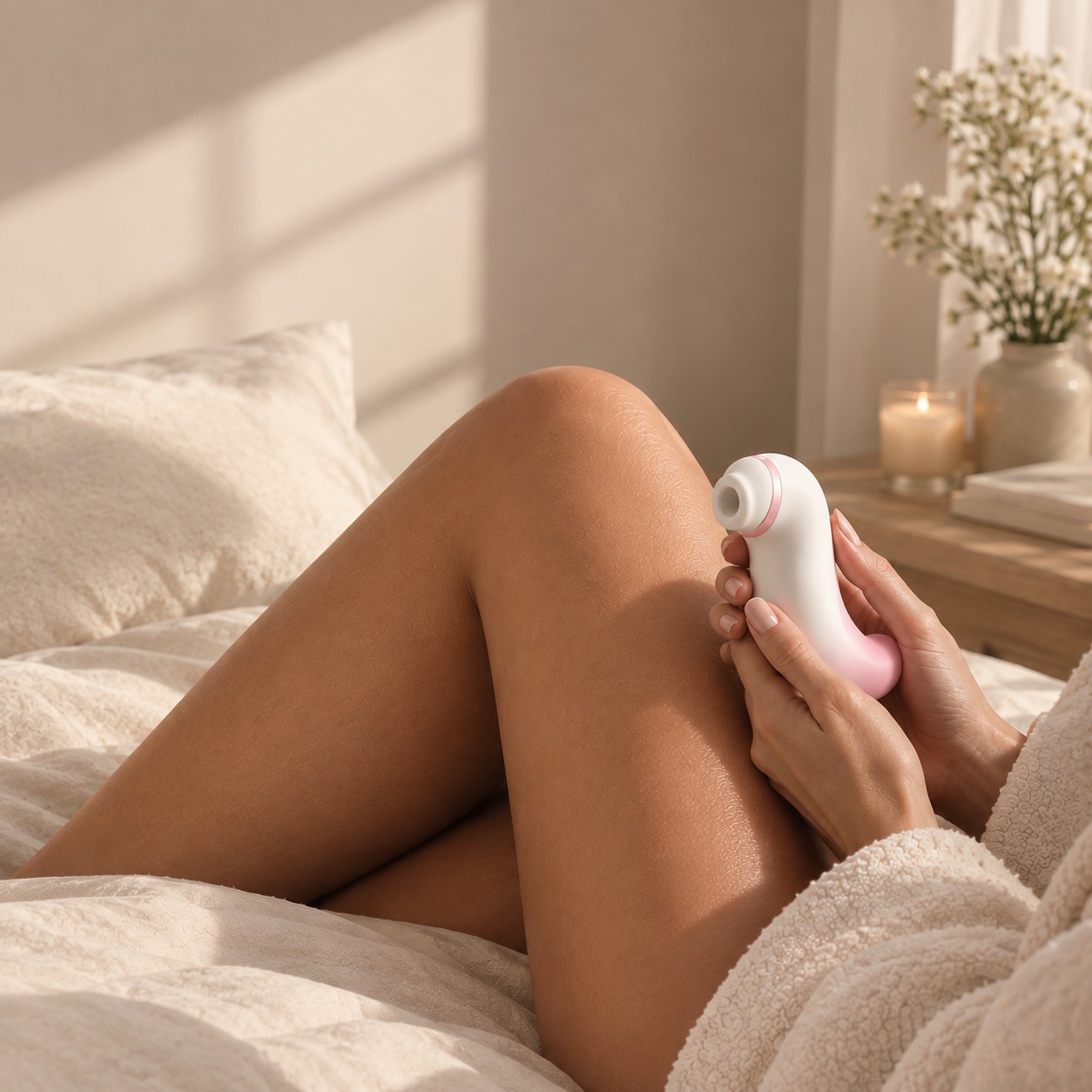
If you try something like this, the starting place I would suggest is the lowest setting, held gently around (not pressed onto) whatever area feels right. Pause. Check in with yourself. Notice whether your body wants more, less, or something different. It isn't going to fix burnout or manufacture desire. It just gives you one quiet option on the nights you feel open to it.
And on the nights when even that feels like too much, rest is a perfectly good answer too. The point is your comfort.
If you use a product, check the Lube Compatibility Checker and follow its individual instructions. The guide to cleaning and storing sex toys covers the basic aftercare routine.
Schedule Connection, Not Sex
Putting intimacy on the calendar can protect it from work, kids, and the long list of other demands. The trouble starts when the appointment comes with an expected sexual outcome.
Instead of scheduling sex, try scheduling a protected window for connection.
- Twenty minutes without phones
- A massage with no progression toward penetration
- Lying together and talking
- Solo time behind a closed door
- Kissing that can stop at kissing
- Going to bed early
Knowing that affection doesn't have to turn into a demand makes touch feel safer, and a lot more appealing.
If you want to say something to a partner, a line that often works is:
This frames low desire as a shared context to understand instead of a rejection or an accusation. For more scripts, see how to communicate your needs without pretending.
Protect the Conditions That Support Desire
A pleasure product or a date night can't make up for a life that has no real recovery in it.
Look at the conditions surrounding the change:
- Are you sleeping enough to feel physically present?
- Does work enter every room through your phone?
- Are you carrying an unequal share of domestic or emotional labor?
- Does intimacy happen only after everything else is finished?
- Is sex painful, rushed or centered on someone else’s satisfaction?
- Have you stopped enjoying other activities too?
Sometimes desire is asking for more than a technique. It is pointing at a pace of life that doesn't leave room to want anything at all.
Hormones and energy can also change through the month. The guide to menstrual-cycle self-care, energy and libido offers a way to observe those changes without turning them into a rule.
When to Seek Professional Support
Speak with a healthcare professional if low desire:
- Appeared suddenly without an obvious reason
- Persists after the stressful period has passed
- Causes significant personal or relationship distress
- Occurs with pain, dryness, bleeding or other physical symptoms
- Began after starting or changing medication
- Appears alongside persistent sadness, anxiety or loss of pleasure
- Is connected to past trauma or fear of intimacy
Antidepressants and some other medications may affect desire, arousal or orgasm. Do not stop or change prescribed medication independently; discuss possible options with the prescribing clinician.
A gynecologist, primary-care professional, qualified sex therapist or mental-health professional can help assess physical, psychological, relationship and medication-related factors.
Questions You Might Actually Have
Can work stress cause low libido?
It can play a role through fatigue, distraction, anxiety, less privacy, and the difficulty of stepping out of alert mode. It may be one factor among several rather than the only cause.
Is sexual burnout a medical diagnosis?
No. Sexual burnout is a phrase people use to describe feeling sexually drained, disconnected, or numb. If the feeling is ongoing or distressing, it is worth checking in with a professional to look at low desire, depression, medication effects, or other causes.
How long does it take for libido to return?
There is no standard timeline. It often improves as sleep, workload, and emotional wellbeing recover. If the change is persistent, bring it up with a healthcare professional.
Should couples schedule sex when desire is low?
Scheduling private time can help, but scheduling a required sexual outcome may add pressure. Begin with protected time for connection and allow both partners to decide what feels welcome.
Can a vibrator restore libido?
A vibrator can't create desire or treat burnout. It can make it easier to explore sensation when curiosity is already there, and it can take some of the effort out of holding consistent stimulation.
What if I want closeness but not sex?
Say exactly that. Affection, massage, conversation and shared rest can hold intimacy without asking anyone to be sexual.
The Takeaway
When work has consumed your attention, low desire is not proof that you have become cold, broken or incapable of intimacy.
It may be a body asking for recovery before stimulation.
The way back is rarely a dramatic attempt to “restart” your sex drive. It is a series of smaller permissions: to stop working, to feel one sensation, to receive touch without obligation and to let curiosity appear at its own pace.
Desire does not respond well to performance reviews.
Give it privacy, attention and room to return.