One partner reaches across the bed. The other turns away and says they are tired.
Nobody means to cause pain. But the moment can quickly become larger than itself.
The person who reached over might hear a silent message that they are no longer wanted. The person who turned away might feel like they are failing the relationship all over again. Over time, desire gets surrounded by rejection and guilt and a kind of anxiety that shows up before anyone even touches.
People call this libido mismatch, or sexual desire discrepancy. One person wants sexual connection more often or more intensely or under different conditions than the other.
It is one of the most common reasons couples look for support. It does not automatically mean one person has a disorder or the relationship is failing. Desire moves around with stress and sleep. It shifts with health and medication and hormones and parenthood. It responds to how emotionally safe someone feels in the room.
The point is not to figure out whose libido is normal. The point is to build a relationship where both people can say they want something and say no to touch and talk about intimacy without being punished for it.
Here are five therapist-informed places to start.
1. Stop Treating Frequency as a Measure of Love
When couples only look at how often sex happens, they usually miss what is actually going on underneath.
The person who wants sex more often might be looking for reassurance that they are still attractive. They might be chasing emotional closeness or a moment of playfulness. Sometimes they are just lonely and want to feel chosen.
The person who wants it less often might be looking for freedom from expectation. They might need more emotional connection before any sexual touch makes sense. They could be recovering from stress or exhaustion. They might simply want touch that does not automatically turn into something more.
Neither set of needs is more valid than the other.
I have talked to enough couples to know that the higher-desire partner often feels ashamed of wanting more, and the lower-desire partner often feels selfish for wanting less. Both of those feelings make honest conversation harder.
Research describes desire discrepancy as a relational pattern rather than proof that one person is broken. Couples manage it in many ways. Some work through communication. Some find different forms of intimacy. Some change how they initiate. Whether a strategy works depends partly on whether both people experience it as voluntary and respectful. Archives of Sexual Behavior
Try replacing the question how often should we have sex with a different one. What does sexual connection mean to each of us, and what makes it feel safe?
That shifts the conversation away from quotas and toward understanding. A frequency target easily becomes a performance requirement. A shared understanding creates more room for honest desire.
2. Understand Spontaneous and Responsive Desire
A lot of people expect desire to show up out of nowhere. You feel interested first, then you go looking for sexual contact.
That is spontaneous desire. It tends to be loudest in a new relationship when novelty and anticipation are running high.
Other people experience responsive desire more often. They do not start with a strong sexual urge. Interest shows up after they feel rested or emotionally connected or pleasantly stimulated.
Rosemary Basson, a psychiatrist and sexual-medicine researcher, proposed a model of sexual response that recognizes how desire in long-term relationships often develops in response to context rather than appearing before arousal. Journal of Sex & Marital Therapy
Neither style is more authentic.
But responsive desire is not a license to pressure someone into sexual activity. It does not mean you should start touching someone and wait for them to come around.
A person can be open to exploration without promising sex. They have to remain free to pause and change direction and stop altogether.
A useful invitation might sound like:
“Would you be interested in ten minutes of closeness with no expectation that it becomes sexual?”
The answer may be yes, no or not tonight. A safe relationship makes all three answers emotionally acceptable.
3. Identify the Brakes Before Pressing the Accelerator
Couples often respond to low desire by adding more stimulation: lingerie, date nights, toys or scheduled sex.
These can be enjoyable, but they may not help when the nervous system is already applying several brakes.
The Dual Control Model proposes that sexual response is influenced by the balance between excitation and inhibition. In simple terms, people have sexual “accelerators” and “brakes,” and sensitivity to each varies between individuals and situations. The Journal of Sex Research
Possible accelerators include:
- Feeling desired without being pressured
- Privacy and uninterrupted time
- Flirting and anticipation
- Affectionate touch
- Novelty
- Feeling emotionally understood
Common brakes include:
- Exhaustion
- Unresolved conflict
- Body-image anxiety
- Pain or dryness
- Fear that affection will become an obligation
- Children, phones or work nearby
- Medication side effects
- Previous unwanted sexual experiences
Each partner can privately write down three accelerators and three brakes. Compare the lists without debating whether an item “should” matter.
Then ask:
“Which one brake could we reduce this week?”
That may mean sharing household responsibilities, protecting 30 minutes without phones, addressing painful sex or agreeing that certain forms of affection will not escalate.
Removing one brake is often more realistic than trying to manufacture desire on command.
4. Separate Affection from Sexual Obligation
When every kiss and cuddle and massage gets treated as the beginning of sex, the person who wants it less may start avoiding all touch.
The person who wants it more then gets even less affection and initiates more urgently and unintentionally cranks up the pressure. Both people get stuck in a loop:
Expectation → anxiety → avoidance → rejection → greater expectation
One way sex therapists address performance pressure is through Sensate Focus, a structured touch practice that shifts attention away from intercourse and orgasm and toward physical sensation.
Research on Sensate Focus suggests that it may support sexual function and intimacy for some couples, although it is not appropriate for every relationship or every source of sexual distress. Randomized controlled trial
A simplified, pressure-free exercise can begin like this:
Agree on a 10- or 15-minute limit.
Decide which areas of the body are comfortable to touch.
Take penetration and orgasm off the agenda.
Let the receiving partner guide pressure and pace.
Stop when the timer ends unless both partners independently want to continue.
The goal is to rebuild trust in touch.
If either partner has a history of trauma or significant conflict or difficulty maintaining boundaries, explore this kind of practice with a qualified therapist rather than trying it alone.
5. Expand Your Definition of Intimacy
A couple with mismatched desire needs more options—not more pressure.
Create an “intimacy menu” together. It can include several levels of connection:
Every option on that menu should stay an invitation. None of them should be a consolation prize or an obligation.
When both partners genuinely want erotic exploration, a simple product can reduce guesswork and allow the receiving partner to control the experience. The Joybloom Lola has one-button control and ten vibration patterns for external, solo or partnered exploration.
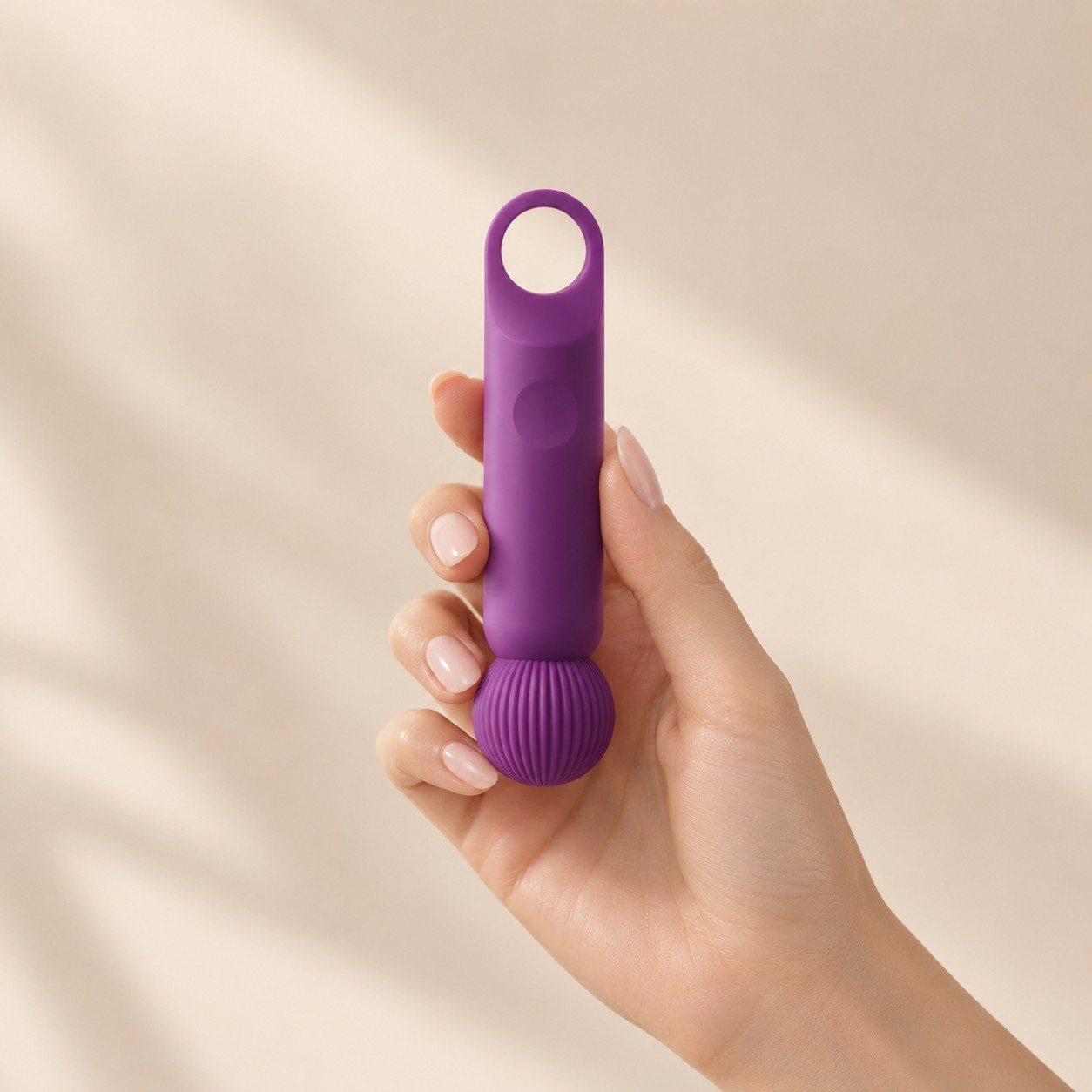
Before introducing it, agree on who will hold it, where it may be used and what signal means “pause.” Begin at a low setting and avoid treating orgasm as the test of whether the experience succeeded.
Lola cannot resolve a libido mismatch. Its useful role is to support curiosity, personal control and communication when both people have already said yes.
Use Language That Reduces Defensiveness
Sexual communication is consistently associated with greater sexual and relationship satisfaction. A meta-analysis covering 93 studies found that the quality of sexual communication had a stronger association with satisfaction than communication frequency alone. Journal of Family Psychology
The conversation does not need to happen immediately after rejection. Choose a neutral time when neither partner is initiating sex.
Try replacing accusations with specific emotional information:
|
Instead of |
Try |
|
“You never want me.” |
“I have been feeling disconnected, and I miss feeling physically close to you.” |
|
“You only touch me when you want sex.” |
“I need affectionate touch that can remain affectionate without becoming an expectation.” |
|
“We need to have sex more often.” |
“Can we talk about what helps each of us feel open to intimacy?” |
|
“Something must be wrong with you.” |
“I have noticed that desire has changed. Is anything making intimacy uncomfortable or difficult?” |
|
“Fine, I will stop initiating forever.” |
“How could I initiate in a way that feels respectful and easier to answer honestly?” |
Good communication does not guarantee matching desire. It keeps the difference from turning into a fight about worth or loyalty or who controls whose body.
What Healthy Compromise Does—and Does Not—Mean
A healthy compromise might mean choosing a better time. It might mean expanding the range of intimate activities or making room for solo pleasure.
It does not mean agreeing to unwanted sex to prevent an argument.
Research suggests that pretending to feel desire can be associated with lower sexual authenticity and poorer relationship outcomes, particularly on low-desire days. Archives of Sexual Behavior
Consent given mainly to manage a partner’s mood is unlikely to build sustainable intimacy. The higher-desire partner is allowed to experience disappointment, but the lower-desire partner should not be responsible for preventing every disappointed feeling with access to their body.
At the same time, repeatedly dismissing a partner’s need for connection without discussion can deepen loneliness.
The middle ground is not duty sex. It is honest negotiation, affection, empathy and mutually wanted alternatives.
When to Seek Professional Support
Desire changes can have psychological or relational or physical causes.
Consider talking to a healthcare professional if low desire is new or persistent or distressing. That is especially important when it comes with pain during sex or vaginal dryness or erectile difficulty. Depression and significant anxiety matter. So do fatigue and sleep disruption and hormonal changes and recent medication changes. Loss of sensation or a history of trauma or conflict that makes communication feel unsafe are all reasons to reach out.
ACOG notes that stress, anxiety, depression, medication and physical discomfort may all affect sexual desire and response. Low desire is not automatically a disorder; clinical concern depends partly on persistence and personal distress. American College of Obstetricians and Gynecologists
A licensed couples therapist, psychologist or certified sex therapist can help identify patterns that are difficult to change alone. Seek individual support first if coercion, fear, punishment or abuse is present.
Frequently Asked Questions
Is libido mismatch normal in a long-term relationship?
Differences in sexual desire are common, and desire can fluctuate throughout a relationship. The important issue is whether the difference creates distress, pressure, resentment or avoidance.
Does the lower-desire partner need to increase their libido?
Not automatically. Both partners should examine the emotional, physical and relational context. The goal is not to make one person conform to the other’s preferred frequency.
Should couples schedule sex?
Scheduling can protect time for connection, but it should schedule an opportunity—not an obligation. Either partner must still be free to change their mind.
Can responsive desire help explain low libido?
It can explain why some people become interested only after relaxation or pleasant stimulation begins. It does not mean they should agree to touch they do not want.
Can solo pleasure be part of the solution?
Yes. Solo pleasure may help partners manage different frequencies without assigning one person complete responsibility for the other’s sexual needs. It should be discussed without shame or secrecy when it affects shared expectations.
When should we see a sex therapist?
Consider professional help when conversations repeatedly become hostile, one partner feels pressured, painful sex is involved or the mismatch is significantly affecting the relationship.
The Takeaway
A libido mismatch is not a contest between the partner who wants “too much” and the partner who wants “too little.” It is a difference that requires curiosity, emotional safety and negotiation.
Understand how each partner experiences desire. Identify the brakes. Protect affection from automatic escalation. Expand the ways you connect, and use language that makes honesty safer than avoidance.
The goal is a relationship where both people can say “I want this,” “not tonight” or “could we try something different?”—and still feel respected, desired and loved.