I want to start with three sentences I have said out loud, also heard from friends, and also said to myself when I thought no one was listening.
Sometimes those sentences are real. You actually feel fine. The moment actually was good. You genuinely want whatever they want. That version of you is not the version this article is for.
This article is for the other times. The times when I am fine are a small costume you put on so the vibe stays the same and nothing has to change. The times when whatever you want is a soft no that is pretending to be a soft yes. The times when you are not lying exactly, but you are also not telling the truth.
I have been on both sides of that costume. I have said all these 3 lines. I have also been the partner trying to read what was underneath. The reading almost never works. The person performing is not trying to be understood. They are trying to keep the air in the room stable.
If you have been the one doing the performing, the most important thing I can tell you is that it does not work forever. If you have been the one trying to read through it, the most important thing is that you are not failing because you are not paying attention. The signal was not built for you to decode.
Honest Communication Is Part of Intimacy
Sexual communication is not separate from sexual connection. It helps create it.
A 2022 meta-analysis found that better sexual communication was positively associated with both relationship satisfaction and sexual satisfaction. The quality of the communication—not simply how often couples discussed sex—was particularly important. Because the findings describe an association, they do not prove that conversation alone causes a satisfying relationship. They do show that communication and intimacy are meaningfully connected. Archives of Sexual Behavior
A separate meta-analysis covering 48 studies also found an association between sexual communication and multiple areas of sexual function, including desire, arousal, orgasm and overall function. The Journal of Sexual Medicine
The goal is not constant analysis. It is enough safety and clarity for each person to say:
- This feels good.
- I would like something different.
- I am not sure yet.
- I want to pause.
- I do not want this.
- I would like to try something new.
Why We Pretend—Even With Someone We Love
People do not perform peacefully because they want to lie. They do it because the alternative feels more expensive.
You may fear that any honest feedback will be heard as rejection. You may have learned that being easygoing is what makes you lovable. You may have had a partner who responded to a clear boundary with anger. Or with a long silence. Or with the kind of withdrawal nobody names out loud.
You may also just not have the words yet. Many adults were never taught a vocabulary for pleasure. Or for discomfort. Or for desire that did not arrive wrapped in shame. The vocabulary tends to be built later, awkwardly, in the moments you most need it.
Sometimes the honest answer is I do not know what I want yet. That is not a failure of the conversation. It is the beginning of one.
You do not need a fully developed map of your preferences before you open your mouth. You only need to be willing to find out together.
Communication becomes easier when both partners understand that feedback is information, not a performance review. If naming preferences feels unfamiliar, sexual self-care and body awareness can help you notice what you may want to communicate.
Choose the Right Moment
Larger conversations are usually easier outside the moment itself. A private time when neither person is rushed. When neither person is exhausted. When the conversation is not already an argument. Not right after a disappointment, when both of you are still tender.
You might say:
“There’s something about our intimacy I’d like to talk about. Nothing is wrong right now—I want us to understand each other better. Is this a good time?”
Immediate adjustments, however, often need to happen in the moment. They can be short:
- “A little slower.”
- “Softer, please.”
- “Stay there.”
- “I want to change position.”
- “Can we pause?”
- “I don’t want to continue.”
You do not need to turn every adjustment into a long explanation. Clear, simple direction can be both kind and intimate.
A Four-Part Framework for Expressing a Need
When the topic feels emotionally charged, structure helps. Four parts.
Describe What Happens
Begin with a neutral observation rather than a judgment.
Instead of: “You always rush.”
Try: “I’ve noticed we sometimes move into touch very quickly.”
Describe Your Experience
Explain what happens in your body or emotions.
“When that happens, I notice that I tense up and have difficulty becoming present.”
An “I feel” statement is not automatically gentle if it ends in an accusation. “I feel like you never care about me” still assigns blame. Focus on your actual experience: anxious, disconnected, pressured, uncertain or distracted.
Name the Need or Preference
“I need more time to feel relaxed and connected.”
A need is not proof that your partner has failed. It is information about what helps you.
Make a Specific Request
“Could we begin more slowly and spend longer kissing or touching before deciding what happens next?”
A specific request is easier to understand than “Be more romantic” or “Make me feel wanted.” It also leaves room for your partner to answer honestly.
Put together, the complete message might be:
“I’ve noticed we sometimes move into touch quickly. I tend to tense up when I haven’t had time to become present. I need a slower transition. Could we begin with ten minutes of kissing or massage and check in before going further?”
Communication Scripts for Difficult Moments
The right words depend on your relationship. But having a first sentence ready can lower the cost of starting.
When You Want to Start an Honest Conversation
“I care about what we share, and I want it to feel honest for both of us. Can we talk about what has and hasn’t been working?”
When You Want More of Something
“I really liked the slower pressure earlier. Could you stay with that longer next time?”
Specific positive feedback helps your partner understand what to repeat.
When You Want to Adjust Something in the Moment
“That is a little intense for me. Could we use less pressure?”
Or simply: “Pause. I want to reset.”
When You Do Not Want Sex
“I don’t want sex tonight. I care about you, and my answer is still no.”
If you genuinely want another form of closeness, you may add: “I would enjoy cuddling or a massage. Would either of those feel good to you?”
You never owe alternative intimacy in exchange for saying no.
When You Have Been Pretending
“I need to tell you something vulnerable. I’ve sometimes acted more enthusiastic or comfortable than I actually felt because I was afraid of disappointing you. I don’t want to keep pretending. I’d like us to make honest feedback safer for both of us.”
Your partner may need time to process this. You can take responsibility for giving inaccurate signals without accepting blame for every pattern in the relationship.
When Your Desire Levels Are Different
Desire discrepancy is common and does not automatically mean that either partner is broken or no longer attracted to the other.
“I don’t think either of us is wrong. Our levels of desire are different right now. Can we talk about what helps each of us feel connected without turning frequency into a score?”
Research suggests that how couples respond to desire differences may matter more than eliminating the difference itself. Collaborative strategies are generally more constructive than avoidance, pressure or having sex solely to prevent conflict. Archives of Sexual Behavior
When Your Partner Becomes Defensive
“I’m not saying that you failed. I’m giving you information that can help us understand each other.”
If the conversation continues escalating: “I want to continue this discussion, but not while we’re both defensive. Can we pause and return to it tomorrow evening?”
A pause should include a real plan to return. Otherwise it becomes a quiet way of avoiding the topic forever.
Learn How to Receive Feedback, Too
Communication becomes safer when both people know their honesty will not be punished.
When your partner shares a need, resist the urge to defend your intentions immediately. Intention matters, but it does not erase their experience.
“Thank you for telling me.”
“It sounds like you want more time to feel connected before sexual touch. Did I understand correctly?”
You can ask questions without interrogating:
- “Would lighter pressure feel better?”
- “Do you want me to check in verbally?”
- “Is this something you want to explore now or another time?”
Receiving feedback calmly does not require agreeing to every request. You may have boundaries and preferences of your own. The objective is mutual understanding, not automatic compliance.
Turning Curiosity Into a Shared Exploration
Sometimes a pleasure product makes preferences easier to talk about, because it creates a concrete question. What sensation. What intensity. What kind of control would feel comfortable for each of us?
You might begin with:
“I’m curious about trying a toy together. Would you be open to looking at some options with no expectation that we buy or use one?”
If this feels difficult to raise, read how to introduce a sex toy without making a partner feel replaced before choosing a product.

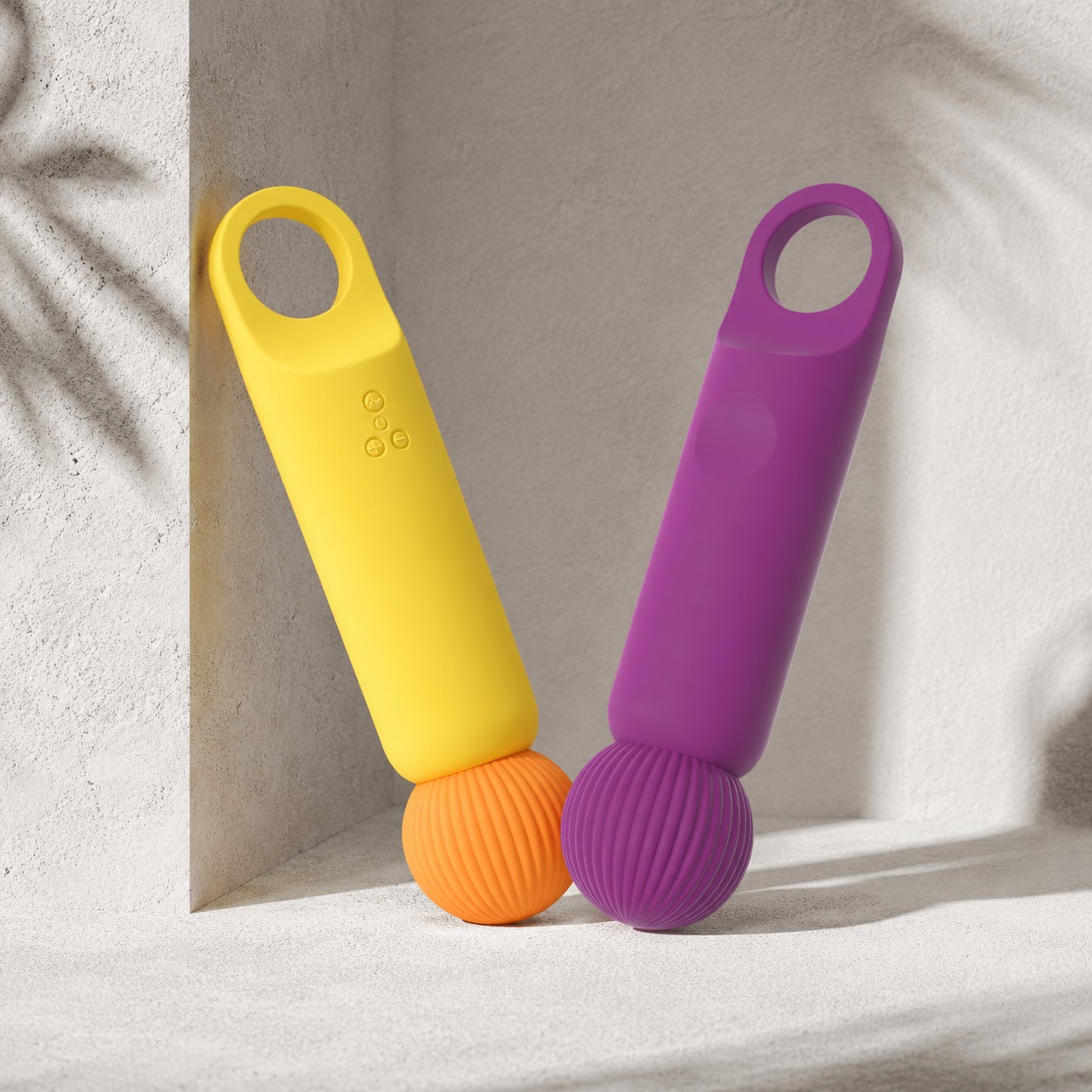
The Joybloom Luna Bloom combines a detachable internal vibrating wand with an external PneumaWave Tech component. Because the two parts can be explored separately, it may support a conversation about whether you prefer internal sensation, external stimulation, a combination or simply watching and giving feedback.
Before using any shared product, discuss three questions:
- Are we both genuinely curious?
- Who will control the product and its intensity?
- What words or signals mean “slow down,” “pause,” or “stop”?
Begin gently, use compatible lubricant and clean each component according to its instructions. The Lube Compatibility Checker and guide to cleaning and storing sex toys can help with product care. A product cannot create consent, repair damaged trust or resolve a desire difference. It is only an optional tool for exploration when communication and safety are already present.
For more product-specific options, explore sex toys for couples or see positions that leave room for communication and vibrator control.
Try a 10-Minute Intimacy Check-In
Do not wait until a problem becomes a crisis. A short, regular check-in can make intimate communication feel more ordinary.
Give each person uninterrupted time to share:
- One thing they appreciated
- One preference or need
- One boundary: uncertainty or curiosity
The listener reflects what they heard before responding. Neither person has to solve everything immediately.
For example:
“I appreciated how affectionate you were this week. I would like more nonsexual touch when we go to bed. I’m also curious about planning private time instead of waiting for desire to appear spontaneously.”
This practice turns communication into maintenance rather than emergency repair.
A Request Is Not a Demand
You are allowed to express a desire. Your partner is allowed to decline it.
Consent should be freely given, informed, specific and reversible. Agreeing once does not create permanent permission, and beginning an experience does not remove anyone’s right to stop. Planned Parenthood
If a partner responds to your boundary with threats, guilt, humiliation, manipulation or persistent pressure, the problem is not that you have failed to communicate elegantly enough. Coercion is not a communication style.
Prioritize safety and consider speaking privately with a qualified therapist, healthcare professional or appropriate support service.
When Professional Support May Help
Consider working with a licensed couples therapist or certified sex therapist if any of the following sounds familiar:
- Every intimate conversation becomes an argument
- One or both partners consistently shut down
- You feel afraid to express a boundary
- Past trauma affects intimacy
- Pain or physical symptoms make sexual activity difficult
- Desire differences create persistent resentment
- Trust has been damaged
- Either person uses pressure or punishment
Physical pain, bleeding, persistent numbness or sudden changes in sexual function should also be discussed with an appropriate healthcare professional.
Questions You Might Actually Have
How do I tell my partner what I want without hurting their feelings?
Choose a calm moment, describe your experience without judging their character and make a specific request. Emphasize that feedback is intended to help you understand each other, not grade their performance.
Is it normal to feel awkward talking about sex?
Yes. Many people received little healthy education about intimate communication. Awkwardness does not mean the conversation is going badly; it may mean you are practicing a new skill.
What if I do not know what I want?
Say so. You might explain, “I don’t know exactly what I prefer yet, but I would like to explore slowly and give each other feedback.” Uncertainty is more useful than pretending certainty.
How do I admit that I have been pretending?
Pick a private, neutral moment. Explain what you did, why honesty felt hard, and what you want to change. Do not use the confession as punishment. Also do not minimize your experience just to spare your partner from all discomfort.
What if my partner becomes defensive?
Reassure them that you are sharing information rather than declaring failure. If the discussion becomes unproductive, pause and agree on a specific time to return to it.
How should couples handle mismatched sex drives?
Avoid treating frequency as a measure of love. Discuss what each person misses, what creates pressure and which forms of connection feel genuinely acceptable to both. Professional support may help when the difference creates ongoing distress.
Can a couples’ toy improve communication?
It can create opportunities to discuss sensation, control and boundaries, but it cannot replace communication or repair trust. Both partners should be freely interested, and either person may stop at any time.
The Takeaway
Learning how to communicate your needs in a relationship does not mean finding the perfect sentence that prevents every difficult emotion.
It means trusting that your comfort, pleasure, uncertainty and boundaries deserve language.
Honesty may initially feel less graceful than pretending. In the long term, it gives both partners something performance never can: the chance to build intimacy with the real person in front of them.
Clarity is not cruelty.
A respectful “slower,” “not tonight,” “I’m not sure” or “I would like more” can be an act of care—for your partner, your relationship and yourself.